Dental Bridge
in Thailand.
A dental bridge in Thailand is a 5–7 day trip for a conventional tooth-supported bridge: preparation on day 1, temporary bridge, lab fabrication, and final cementation around day 5–7. Implant-supported bridges take two trips 3–4 months apart. Our Bangkok team books the prosthodontist, the lab, and the recovery hotel. We've personally visited every clinic we recommend.
Last updated September 2026
“Back to chewing on both sides.”
Thomas W. · Sydney, AU
Dental bridges in Thailand — about a third of the US self-pay price.
A 3-unit zirconia bridge at a mid-range Bangkok specialty clinic runs $800–$1,200 all-in; premium JCI-hospital dental departments at Bumrungrad or Samitivej run $1,200–$1,800 for the same design. An implant-supported bridge (two implants plus a 3-unit bridge across two trips) runs $3,500–$5,500 at the premium tier. That's roughly a third of the US self-pay quote of $2,500–$4,500 per 3-unit bridge (surgeon + lab + visits) and well below Australia (AUD $3,500–$6,000), the United Kingdom (£1,800–£3,500), and Canada (CAD $3,000–$5,500). Same IPS e.max, Ivoclar zirconia, and FDA-cleared implant systems — what differs is the Bangkok cost base, not the standard of care.
🇹🇭Thailand
$800–$1,800 (3-unit)
all-in, mid-range tier
- Prosthodontist consultation + treatment plan
- Abutment preparation + gingival retraction
- Digital intra-oral scan or PVS impression
- Lab-fabricated zirconia, lithium disilicate, or PFM bridge
- Temporary bridge between visits
- Final cementation + occlusal adjustment
- 24–48 hour post-cementation review before you fly
Other Countries
- Implant-supported bridge surcharge — two implants and 3–4 month osseointegration
- Pre-existing abutment teeth needing root canal before bridge work
- No concierge or travel coordination
Is a dental bridge in Thailand safe?
Yes — when the prosthodontist is registered with the Thai Dental Council and the abutment preparation is done by a specialist, not a generalist cosmetic clinic.
The headline evidence is Pjetursson 2015 — Part II systematic review of multiple-unit fixed dental prostheses: 94.4% 5-year survival for conventional metal-ceramic bridges and 90.4% for densely sintered zirconia. Anterior resin-bonded (Maryland) bridges do even better at the 5-year mark — 98% survival in the 2017 BDJ systematic review. These figures require good abutment selection, precise margins, and a properly calibrated bite.
Thailand hosts 65 JCI-accredited healthcare organisations — more than any country in Southeast Asia. Premium-tier bridge work is done inside hospital dental departments at Bumrungrad, BNH, and Samitivej. The regulatory floor is the Thai Dental Council; the specialty credential to look for on top is a Royal College of Dental Surgeons of Thailand prosthodontic board certification.

Nat
Co-founder, ClinicPins
94.4%
5-year survival for conventional metal-ceramic tooth-supported bridges in Pjetursson 2015 — the benchmark systematic review of multiple-unit FDPs
65+
JCI-accredited hospitals across Thailand — the most in Southeast Asia — with the Bumrungrad Dental Department operating inside the first Asian JCI-accredited facility
98%
anterior Maryland bridge survival at 5 years in a 2017 BDJ systematic review — the minimally-invasive alternative for a single anterior missing tooth
Dentist credentials that matter
Thai Dental Council registration
Every practising dentist in Thailand must be registered with the Thai Dental Council under the Dental Profession Act. The English-language directory lets you confirm the registration number of your assigned prosthodontist directly. This is the statutory floor, not the ceiling.
RCDST prosthodontic board certification
A bridge is a prosthodontic restoration. The Royal College of Dental Surgeons of Thailand accredits postgraduate prosthodontic specialists after a 3-year training programme. A ThDC-registered general dentist can legally place a bridge; a ThDC-registered RCDST-certified prosthodontist has the specialty training for multi-unit and implant-supported cases.
Hospital dental-department privileges
Premium-tier Bangkok bridge work runs inside JCI-accredited hospital dental departments — Bumrungrad (JCI since 2002), Samitivej, BNH, Bangkok Hospital. Hospital-grade sterilisation, on-site lab coordination, in-house CBCT imaging for implant planning, and revision-case experience are the value on top of the private-clinic price.
What the research says
Fixed dental prostheses have one of the most evidence-backed survival profiles in restorative dentistry. The Pjetursson 2015 Part II systematic review of 40 studies and 2,906 multi-unit FDPs reports 5-year survival at 94.4% for metal-ceramic, 90.4% for densely sintered zirconia, 89.1% for reinforced glass ceramic, and 86.2% for glass-infiltrated alumina. Framework-fracture rates tell the same story in reverse: metal-ceramic 0.6%, zirconia 1.9%, reinforced glass ceramic 8.0%, and alumina 12.9% — reinforced glass ceramic and alumina are largely out of favour for bridge work as a result. For implant-supported multi-unit restorations, the matching Pjetursson 2012 review reports 95.4% 5-year and 80.1% 10-year survival overall, and 96.4% / 93.9% for metal-ceramic implant-supported FDPs specifically. Resin-bonded (Maryland) bridges sit higher at 98% 5-year anterior survival (Botelho 2017) — the minimally-invasive trade-off is a 19.2% pooled debonding rate, which usually means a re-bond rather than a full re-make.
The decision between a tooth-supported bridge and an implant in Thailand comes down to the adjacent teeth. If the teeth on either side of the gap are virgin, unfilled, and periodontally healthy, most prosthodontists today recommend an implant over a fixed-fixed bridge — because the bridge requires crowning those virgin teeth, and crown preparation carries a 3–25% pulp-necrosis risk over the life of the restoration, with a 15% FPD-abutment pulp-complication rate vs 3% for single crowns. If the adjacent teeth already need crowns (existing large fillings, fractures, or dental crowns in Thailand anyway), a bridge is often the better-value choice because it delivers three restorations for the price of a crown-implant-crown sequence. The Pjetursson 2007 comparison paper remains the reference: at 5 years, 38.7% of implant-FDP patients had some complication vs 15.7% for conventional tooth-supported bridges — the complication profiles are different, not strictly better.
Risks to be aware of
A dental bridge is a low-morbidity restoration done under local anaesthesia — no general anaesthesia, no surgical incision in the conventional tooth-supported case. The risks to track are on the abutment teeth and on the long-term maintenance, not on the day of the procedure. The biggest technical risk is pulp necrosis on an abutment tooth — reported at 3–25% across the literature, with maxillary anterior FPD abutments at the higher end. A bridge abutment carries roughly 5× the pulp-complication rate of a standalone crown on the same tooth.
How to minimise risk:
- Pulp necrosis on abutment teeth (3–25% long-term; 15% for FPD abutments vs 3% for single crowns). Mitigated by minimal preparation, careful coolant, and post-op sensitivity follow-up.
- Secondary caries at the crown-tooth margin — the leading cause of FPD failure long-term. Daily flossing under the pontic (threader or water-flosser) and 6-monthly hygienist reviews are the only real mitigation.
- Debonding / retention loss — 19.2% pooled 5-year rate for Maryland bridges, lower for traditional fixed-fixed. Usually re-bondable without re-making.
- Ceramic chipping on veneered zirconia (~5% 5-year). Monolithic zirconia eliminates this risk but is less translucent. Material choice is cosmetic vs durability.
- Biomechanical overload on cantilever designs — reflected in the higher 20.6% 5-year complication rate vs 15.7% for fixed-fixed. Reserved for specific anatomical cases where a fixed-fixed is not feasible.
Pricing
How much does a dental bridge in Thailand cost by country?
Select your home country
You could save $1,700–$2,700 saved

Price ranges by clinic tier
Prices based on our 2026 clinic research, cross-referenced with published Thai hospital dental-department service pages (Bumrungrad, Samitivej, BNH) and verified with ThDC-registered prosthodontists. Per-unit pricing is for traditional and cantilever bridges — multiply by the number of units (typically 3 for a single missing tooth, 4–5 for two adjacent missing teeth). Implant-supported bridges carry a separate surcharge of $1,800–$3,500 for the two implant placements and 3–4 month osseointegration period across two trips.
Budget Clinic
$350–$800 / unit
Save 60–80% vs 🇺🇸🇬🇧🇦🇺🇨🇦Independent dental clinic, ThDC-registered general dentist, lab-fabricated PFM or monolithic zirconia. Appropriate for a straightforward 3-unit posterior bridge on healthy abutments. Maryland and implant-supported bridges not offered here.
- PFM or monolithic zirconia, per-unit pricing
- Two-visit protocol (prep + cementation)
- External lab, 7–10 day turnaround
- Single post-cementation review
Mid-Range Specialty
$600–$1,200 / unit
Save 45–70% vs 🇺🇸🇬🇧🇦🇺🇨🇦ThDC-registered dentist with RCDST prosthodontic credentials in an accredited specialty dental clinic. All four designs available (traditional, cantilever, Maryland, implant-supported). Most international bridge patients sit here.
- Full material range — zirconia, IPS e.max, PFM, cast metal
- In-house digital lab, 3–5 day turnaround
- CBCT imaging for implant-supported planning
- 2 post-op reviews, occlusal adjustment included
Premium International
$800–$1,800 / unit
Save 25–55% vs 🇺🇸🇬🇧🇦🇺🇨🇦JCI-accredited hospital dental department — Bumrungrad, BNH, Samitivej. RCDST-certified prosthodontist, hospital-grade sterilisation, on-site oral surgery if abutment extractions needed. Best fit for complex multi-unit, implant-supported, or revision cases.
- Full-ceramic and layered-zirconia aesthetic work
- In-house certified Ivoclar and 3M labs
- Oral surgery + prosthodontics co-located
- Revision and implant-supported bridge expertise
- Hospital records, histopathology where indicated
What's included — and what isn't
Typically included
- Prosthodontist consultation + treatment plan
- Abutment preparation + gingival retraction
- Digital intra-oral scan or PVS impression
- Lab-fabricated zirconia, lithium disilicate, or PFM bridge
- Shade selection + aesthetic try-in
- Temporary bridge between visits
- Final cementation + occlusal adjustment
- 24–48 hour post-cementation review before you fly
Typically not included
- Root canal on an abutment tooth (if pulp involvement pre-bridge)฿6,000–฿18,000
- Post and core build-up for a heavily broken-down abutment฿3,500–฿8,000
- CBCT scan if implant-supported bridge planned฿2,500–฿5,000
- Implant placement (per implant, 2 typically needed)฿55,000–฿95,000
- Extraction of a non-restorable tooth pre-bridge฿1,500–฿6,000
- Nightguard after final cementation (recommended for bruxism)฿3,500–฿8,000
- Recovery hotel (5–10 nights)฿2,500–฿8,000 per night
- Flights, airport transfers, travel insurancevaries by origin
Your Trip
Your dental-bridge trip to Thailand
A conventional dental bridge is a 5–7 day trip: preparation and temporary bridge at Visit 1, a 3–5 day in-house lab wait, final cementation at Visit 2, and a day-6 or day-7 occlusion review before you fly. Implant-supported bridges split across two trips 3–4 months apart. Here's what each stage looks like.
Phase 1
Before you arrive
2–6 weeks out
- Send recent photos of your smile and the missing-tooth area (front and angled), any existing X-rays (panoramic or CBCT), and a short dental history to our team on WhatsApp.
- Virtual consultation with your chosen prosthodontist to confirm the bridge design (traditional fixed-fixed, cantilever, Maryland, or implant-supported), the material (zirconia, IPS e.max, PFM), and whether any abutment tooth needs a root canal or post-and-core build-up before the bridge.
- We book your appointments, a hotel 10 minutes from the clinic, and all transfers. For implant-supported bridges we split into two trips 3–4 months apart.
- Handle any local prep at home — hygienist scaling, caries on adjacent teeth, periodontal treatment if flagged. A bridge on an uncontrolled periodontal patient fails early.
- Plan 5–7 days in Bangkok for a conventional tooth-supported bridge; two trips of 3–4 and 3–5 days for an implant-supported bridge.
“We want your X-rays and photos before you fly. Half the surprises we catch pre-trip are structural — an abutment tooth that needs a root canal first, or a missing tooth where the bone shape means an implant is actually the better call than a bridge.”

Nisha
Co-founder, ClinicPins
Phase 2
Visit 1 — preparation and temporary bridge
Day 1
- Morning appointment at the clinic for final review, shade selection, and photos.
- Local anaesthesia, abutment teeth reduced 1.5–2.0 mm with diamond burs under magnification, gingival retraction cord placed.
- Full-arch intra-oral digital scan (or PVS impression at some clinics), bite registration, shade matched to adjacent teeth.
- Temporary bridge fabricated chairside and cemented with temporary cement. You leave with a functional bite and an aesthetic temporary.
- Appointment runs 60–90 minutes for a 3-unit bridge. Numbness wears off over 2–3 hours.
“The temporary matters more than patients realise. Four to seven days with a temporary that fits properly, looks right, and holds the prep teeth in position is what makes the final try-in straightforward. A loose temp creates a whole week of problems.”
Nat
Co-founder, ClinicPins
Phase 3
Lab fabrication, Visit 2, and the months that follow
Day 3 to month 6
Days 2–5
Lab fabrication. In-house digital labs at mid-range and premium tiers turn a 3-unit zirconia bridge around in 3–5 working days. Budget-tier external labs take 7–10 days. You rest with the temporary, avoid hard foods on that side, and sightsee gently.
Day 5–7
Visit 2: final cementation. Temporary removed, final bridge tried in, marginal fit verified under magnification, bite adjusted in closure and lateral movements, cemented with resin or glass-ionomer cement depending on material. Appointment runs 45–60 minutes.
Day 6–8
Post-cementation review — occlusion re-checked once the anaesthetic has worn off fully and you have chewed on it. Final polish of any marginal overhang. Pre-flight clearance by your dentist. Cleared to fly from day 7 for a conventional bridge.
Weeks 2–12
Transient dentine sensitivity on abutment teeth is common and resolves within 2–4 weeks in most patients. Daily flossing under the pontic (threader or water-flosser) becomes routine. 3-month photo review with us on WhatsApp.
Months 3–6
For implant-supported bridges, this is the osseointegration window between trips. For conventional bridges, this is where the bite fully settles. Any minor occlusal adjustment can be done by your dentist at home — we send the Bangkok notes with you.
“The hardest part of a bridge isn't the work in the chair — it's the four-day gap between visits. We plan the in-between days around low-impact food (soups, stews, cut-small meals) and keep a contact number for the clinic on WhatsApp the whole time.”
Nisha
Co-founder, ClinicPins
That’s the plan. Yours gets built around your dates.
Tell us roughly when you’re free and we’ll come back with a schedule that fits, including recovery time before you fly.
Recovery
You're here anyway. Make a trip of it.
Once your prosthodontist clears you (usually day 7 after final cementation), our concierge team can stretch the trip into a second leg or keep you in Bangkok — whichever matches the rest of your week.
Stay in Bangkok
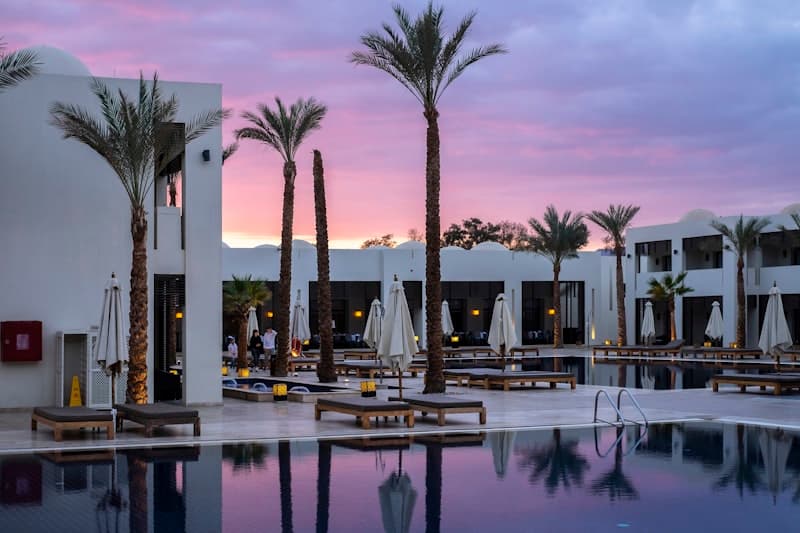
Sukhumvit or Silom puts you ten minutes from your clinic for both visits and any day-6 review. BTS and MRT access, good hotels, quiet restaurants that can do soft-food variations for the in-between days. Easiest logistics and the most discreet option.
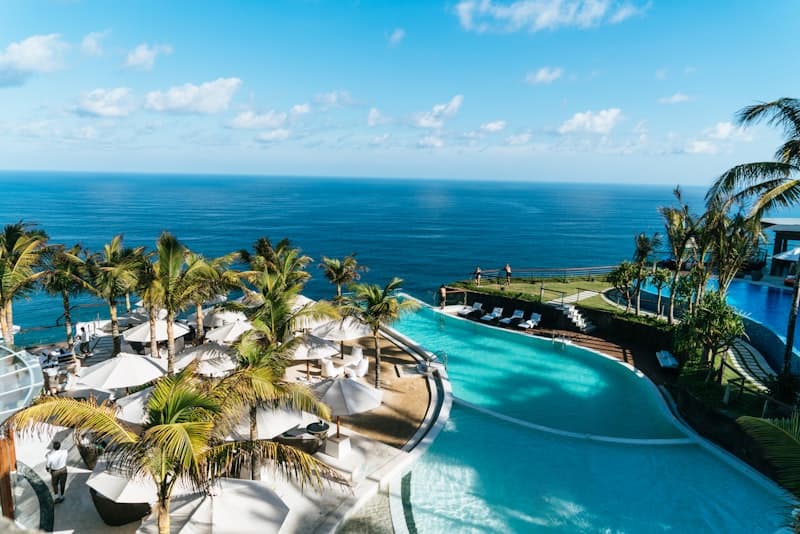
Head to the Beaches
Phuket, Krabi, or Koh Samui a one-hour domestic flight south. Better as a second-leg stop after Visit 2 rather than during the lab wait — the temporary bridge holds up fine for travel but you want to be back in Bangkok for final cementation, not somewhere with a 2-hour evacuation time.
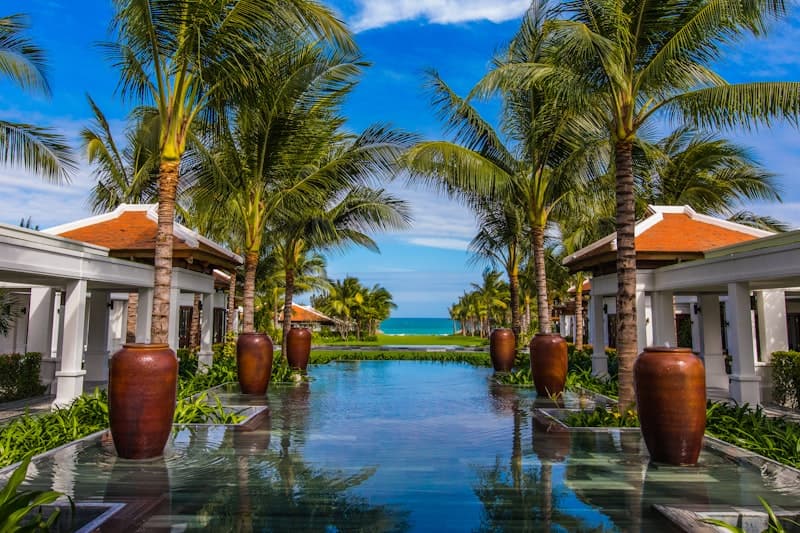
Escape to the Mountains
Chiang Mai in the north is a cooler climate, slower pace, and a food scene that leans soft — curries, soups, steamed dishes that are gentle on a fresh bridge. Calm cafes, good walking, and short domestic flights back to Bangkok for Visit 2.
“A dental bridge is the kind of treatment where the trip can breathe. We book Bangkok tight around the two appointments and open up whatever you want in between — a week at the beach, a quiet stretch up north, or a handful of local days somewhere you've never been.”
Nat
Co-founder, ClinicPins
Options
Procedure types
Four bridge designs cover almost every international bridge case in Bangkok. Your prosthodontist matches the design to the gap, the adjacent teeth, and whether those teeth need crowning anyway.
Traditional fixed-fixed bridgeMost common
The workhorse design. Two adjacent abutment teeth are fully crowned, with a pontic (false tooth) suspended between them as a single rigid unit. Material is typically monolithic or layered zirconia (aesthetic, 90.4% 5-year survival per Pjetursson 2015) or PFM (metal-ceramic, 94.4% 5-year survival — still the highest-ranked conventional material). Best when both abutment teeth already need crowning anyway.
Units
3-unit (single missing tooth) or 4–5-unit (two adjacent missing).
Visits
2 visits in 5–7 days in Bangkok.
Material
Zirconia, PFM, IPS e.max, or cast gold.
Prep
Full-coverage 1.5–2.0 mm reduction on both abutments.
5-year survival
94.4% metal-ceramic / 90.4% zirconia.
$800–$1,800 (3-unit all-in)
Save ~60% vs US“Fixed-fixed is what most international patients end up with — one missing tooth, two adjacent teeth that are already crowned or need to be, and a 3-unit zirconia bridge that sits clean for a decade-plus.”
Nat
Co-founder, ClinicPins
Cantilever bridge
Single-sided support — the pontic hangs off a single abutment tooth crowned at one end. Used only where a fixed-fixed is not anatomically or biologically feasible (e.g. the tooth on one side is unhealthy or missing). Complication rate at 5 years is 20.6% — higher than the 15.7% rate for fixed-fixed, driven by the biomechanical overload on the lone abutment. A good prosthodontist keeps this as a fallback, not a default.
Units
2-unit (abutment crown + single pontic cantilevered off one side).
Visits
2 visits in 5–7 days.
Indication
Single missing tooth where one adjacent tooth is virgin or already missing.
5-year complication rate
20.6% vs 15.7% for fixed-fixed.
Best for
Specific anatomical and biological cases only.
$700–$1,400
Save ~55% vs US“Cantilever is a situational choice. If a surgeon recommends it as the default for a standard missing-tooth case, ask about fixed-fixed first — or whether an implant is the better call.”
Nisha
Co-founder, ClinicPins
Resin-bonded (Maryland) bridge
The minimally invasive design. Metal or ceramic wings on the back of the pontic are bonded directly to the lingual surface of the adjacent teeth — no full-coverage crown preparation required. Anterior 5-year survival reaches 98% in the 2017 BDJ systematic review, with 97.2% at 10 years. The trade-off is a pooled 19.2% 5-year debonding rate — usually a re-bond in a single visit, rarely a full re-make. Best for a single missing anterior tooth where the adjacent teeth are healthy and unfilled.
Units
3-unit with two wings bonded to adjacent teeth.
Visits
2 visits in 5–7 days.
Indication
Single anterior missing tooth, virgin adjacent teeth.
Prep
Minimal — no full-coverage reduction.
5-year survival
98% anterior / 19.2% pooled debond rate.
$350–$900
Save ~70% vs US“Maryland is the underused option. For a missing front tooth where both neighbours are healthy, a Maryland preserves the virgin teeth you'd otherwise have to cut down for a traditional bridge — and anterior survival is excellent.”
Nat
Co-founder, ClinicPins
Implant-supported bridge
Two implants (or more) carry the bridge without touching natural teeth. This is the design decision-tree recommends when the adjacent teeth are virgin and healthy — crowning them for a fixed-fixed bridge carries a 3–25% long-term pulp-necrosis risk, and an implant avoids that entirely. See dental implants in Thailand for implant-specific cost, timeline, and clinic data. Implant-supported FDPs have 95.4% 5-year and 80.1% 10-year survival; metal-ceramic implant bridges specifically reach 93.9% at 10 years.
Units
Typically 3-unit bridge on 2 implants; up to full-arch.
Visits
Two trips 3–4 months apart (osseointegration).
Material
Zirconia, layered zirconia, PFM.
Prep
No natural-tooth preparation — implants only.
10-year survival
80.1% overall / 93.9% metal-ceramic implant FDP.
$3,500–$5,500
Save ~45% vs US“Implant-supported bridge is the right call when your adjacent teeth are untouched. It is more expensive and it takes two trips, but it preserves the virgin teeth and carries the best long-term survival of any bridge design.”
Nisha
Co-founder, ClinicPins
Partner Hospitals
Dental-bridge clinics in Bangkok
Three clinics across the tier range. One premium JCI-hospital dental department for multi-unit, implant-supported, and revision work; one ISO-certified dental specialty hospital; one long-running ThDC-registered dental group at a lower price point.
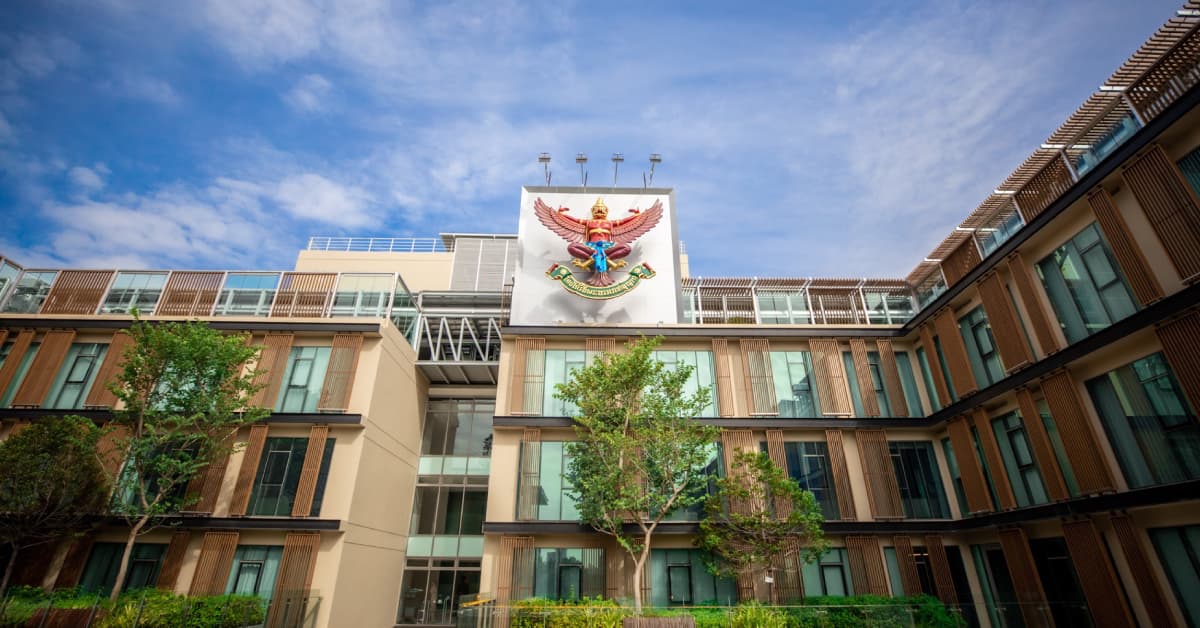
Bangkok International Hospital
JCISoi Soonvijai, Bangkok
JCI-accredited since 2007
Flagship of the Bangkok Hospital Group with multilingual staff and a full surgical program across cosmetic, dental, and general medicine.
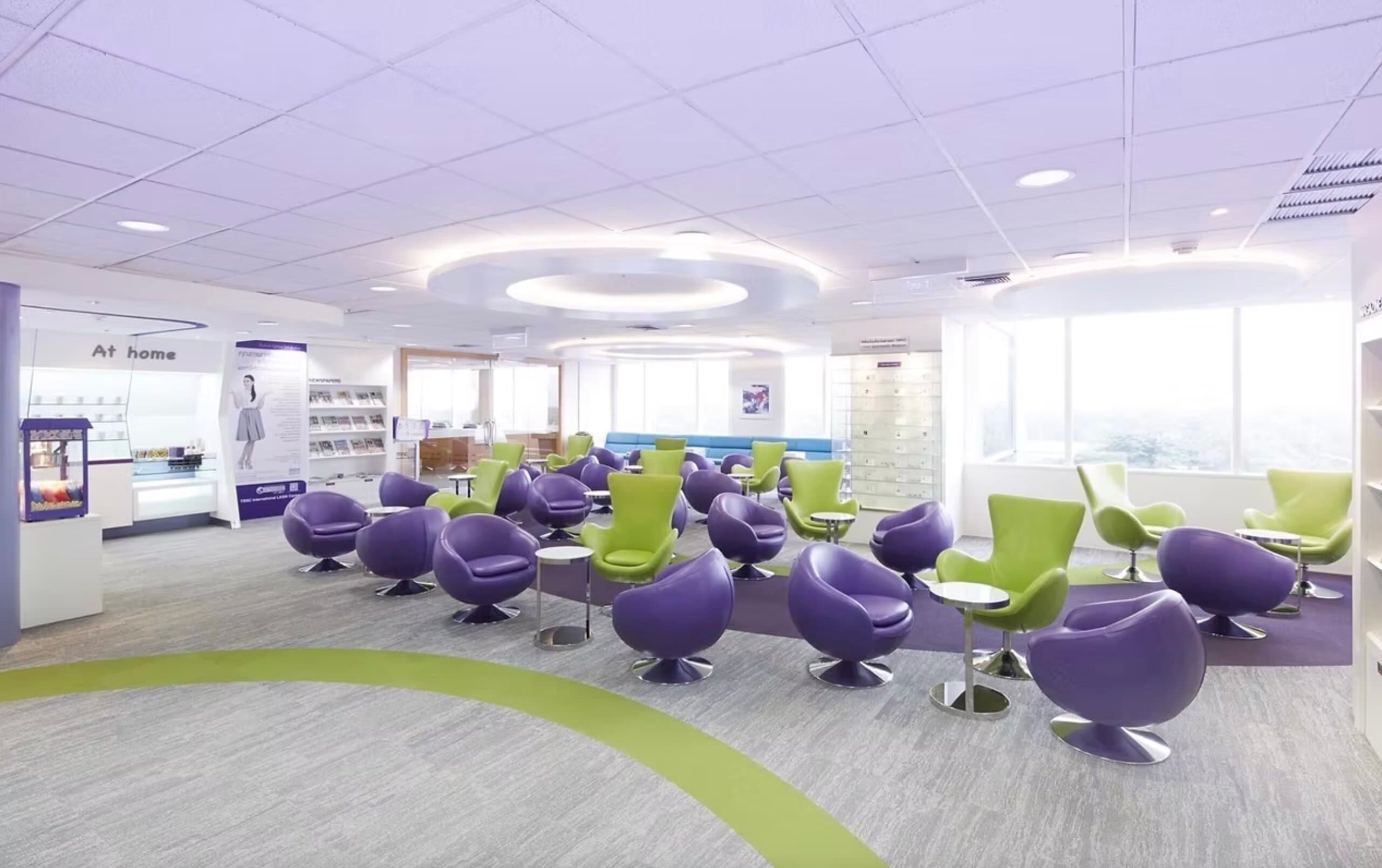
TRSC International LASIK Center
EyeSilom, Bangkok
Dedicated laser vision-correction centre — 102,000+ eyes treated
A standalone eye and vision centre led by medical director Dr. Ekktet Chansue, offering ReLEx SMILE, FemtoLASIK, PRK, and ICL alongside cataract and retinal care.
Not sure which hospital?
Our team can match you with the right hospital based on your goals, body type, and budget.
Talk to UsYour Dentist
How to choose your dental-bridge prosthodontist
Before committing to any dentist, ask these questions — most are happy to answer on video before you book:
Every practising dentist in Thailand must be registered with the Thai Dental Council. Get the registration number in writing and verify it on the Council's English directory before your consultation. For bridge work specifically, the ceiling credential is a Royal College of Dental Surgeons of Thailand prosthodontic specialty certification — ask for it.
An honest prosthodontist tells you which option is better for your specific teeth, not which one costs more. The rule of thumb: if the teeth adjacent to the gap are virgin and healthy, an implant is usually the better long-term call because crowning virgin teeth carries a 3–25% long-term pulp-necrosis risk. If the adjacent teeth already need crowns anyway (large fillings, fractures), a bridge is often the better-value choice.
Monolithic zirconia — 90.4% 5-year survival in Pjetursson 2015, the most durable all-ceramic option, lower translucency than e.max. Layered zirconia — same core, more aesthetic, small added fracture risk on the veneering porcelain. IPS e.max — lithium disilicate, highly aesthetic for anterior work, lower strength for long-span posterior bridges. PFM — 94.4% 5-year survival, the highest of any conventional material, but a metal margin that can show over time. Material choice is cosmetic vs durability; your anatomy and smile line drive the answer.
Not always, but it is worth asking explicitly at consultation. Any abutment tooth with existing deep decay, a large old filling, fracture lines, or documented pulp sensitivity has a higher chance of needing a root canal either pre-bridge or in the years after. Pulp necrosis on a bridge abutment runs 3–25% across the literature, with 15% for FPD abutments vs 3% for standalone crowns. Better to do the root canal now than re-make the bridge in five years.
In-house digital labs (scan, design, mill) turn a 3-unit zirconia bridge around in 3–5 working days and give the prosthodontist direct control over fit and aesthetics. External labs take 7–10 days and add a coordination layer. For a 5–7 day trip, in-house lab work compresses the lab wait and lets you fly on time. Mid-range specialty and premium-tier clinics both run in-house labs; budget clinics typically use external partners.
Cementation-day photos show nothing — every bridge looks flawless the day it is glued in. What you need to see are 3-year and 5-year photos, especially at the margins and at the pontic-gum interface. An honest prosthodontist shares these without hesitation and points out the cases where the gums recessed or the ceramic chipped.
A debonded Maryland bridge or a loose conventional bridge is almost always re-cementable in a single visit at your home dentist. For fractures — more common on long-span posterior zirconia or on cantilever designs — we coordinate directly with your Bangkok prosthodontist on whether a re-make is covered under their guarantee and whether a return trip is warranted. Both BIDC and Bumrungrad offer multi-year guarantees on bridge work.
How we verify
We ask for Thai Dental Council registration numbers, Royal College of Dental Surgeons of Thailand prosthodontic specialty certificates, in-house lab material certifications (Ivoclar IPS e.max, 3M Lava zirconia, or equivalent), and unedited 3-year and 5-year case photos across bridge designs. If a clinic won't share these before you book, we don't recommend it.
Patient Stories
What patients say
All reviews are from verified patients who received treatment at the clinic they're reviewing. All photos shared with explicit written consent.
“Sydney private quoted AUD $5,800 for a 3-unit zirconia bridge. Bumrungrad did the same work with an RCDST-certified prosthodontist for AUD $1,800 all-in. Seven days in Bangkok, two appointments, in-house digital lab finished the bridge in four days. Back to chewing on both sides.”
Thomas W.
3-unit zirconia fixed-fixed bridge, Bumrungrad
“Lost a front tooth playing basketball. US quotes for an implant were $5,500 and would have taken six months. BIDC did an anterior Maryland bridge for $650 in five days — the teeth either side stayed virgin. Five years on, still solid.”
Emma J.
Anterior Maryland bridge, BIDC
“Two missing lower molars, private London quoted £9,500. Split into two Bangkok trips 3 months apart: two implants on trip one (£2,100), implant-supported bridge on trip two (£1,800). Both trips 4 nights, both with a spa stretch added. Total under £4,000.”
Rachel K.
Implant-supported 3-unit bridge, Bumrungrad (two trips)
All photos shared with explicit written consent. Results vary by individual.
See more treatmentsResearched & written by

Nat
Co-founder, ClinicPins
Born and raised in Bangkok. Educated in the US. Personally visited every clinic we recommend.

Nisha
Co-founder, ClinicPins
Fluent in Thai and English. Bridges the gap between international patients and Thai clinics.
We are concierge coordinators, not medical professionals. This content is for informational purposes only and does not constitute medical advice — always consult a board-certified surgeon for personalised recommendations. Meet the team
FAQ
Frequently asked questions
A 3-unit traditional fixed-fixed zirconia or PFM bridge at a mid-range ThDC-registered Bangkok specialty clinic runs $800–$1,200 all-in. Premium JCI-hospital dental departments at Bumrungrad or Samitivej run $1,200–$1,800 for the same design. Budget clinics with ThDC-registered generalists sit at $350–$800 per unit. An implant-supported bridge (two implants + 3-unit bridge across two trips) runs $3,500–$5,500 at the premium tier. US self-pay 3-unit bridges run $2,500–$4,500; UK, Australia, and Canada sit in similar bands.
For a conventional tooth-supported bridge (traditional, cantilever, or Maryland), plan 5–7 days in Bangkok — Visit 1 for preparation and temporary bridge, a 3–5 day in-house lab wait at mid-range and premium clinics, Visit 2 for final cementation, and a day-6 or day-7 occlusion review before you fly. For an implant-supported bridge, plan two trips 3–4 months apart: the first for implant placement (3–4 days), the second for crown-and-bridge work after osseointegration (5 days).
Rule of thumb: if the teeth adjacent to the gap are virgin (no fillings, no crowns, no caries) and periodontally healthy, most prosthodontists today recommend a dental implant in Thailand over a tooth-supported bridge — because the bridge requires crowning those virgin teeth and carries a 3–25% long-term pulp-necrosis risk on the abutments. If the adjacent teeth already need crowns anyway, a bridge is often the better-value choice because it delivers three restorations for roughly the same price as a crown-implant-crown sequence. Pjetursson 2007 remains the reference comparison: 5-year complication rates of 38.7% for implant-FDPs vs 15.7% for conventional bridges — different profiles, not strictly better or worse.
5-year survival across the main designs: metal-ceramic conventional 94.4%, zirconia conventional 90.4%, anterior Maryland 98%, implant-supported 95.4%. 10-year data are strongest for implant-supported at 80.1%, and for well-maintained PFM conventional bridges that regularly reach the 12–15 year mark. The biggest lifespan variable is not the bridge material — it is the daily maintenance: flossing under the pontic with a threader or water-flosser, 6-monthly hygienist reviews, and addressing bruxism with a nightguard if present.
Zirconia — monolithic ceramic, 90.4% 5-year survival, strong and durable, good all-round choice. PFM (porcelain-fused-to-metal) — a metal substructure with porcelain baked over it, highest conventional survival at 94.4% 5-year, but a thin metal margin can show at the gumline over time. IPS e.max (lithium disilicate) — the most aesthetic all-ceramic option, best for anterior single crowns or shorter bridges, lower strength for long posterior spans. Maryland — a design, not a material — wings bonded to adjacent teeth without full crown preparation. Anterior only, but 98% 5-year survival with minimal damage to neighbouring teeth.
Not usually at the time of preparation, but it is a long-term risk to be honest about. Pulp necrosis after crown preparation ranges 3–25% across the literature depending on tooth type and pre-existing condition. FPD (bridge) abutments carry roughly 5× the pulp-complication rate of standalone single crowns (15% vs 3%), and maxillary anterior FPD abutments sit at the higher end. Best practice is minimal preparation depth, careful coolant, and a post-operative sensitivity follow-up. Any abutment tooth with existing deep decay, a large old filling, or documented sensitivity should be evaluated for a pre-emptive root canal at consultation.
No, not safely. Osseointegration — the biological process of the implant fusing with the bone — takes 3–4 months in the maxilla (upper jaw) and 2–3 months in the mandible (lower jaw). Attempting to load an implant with a bridge before osseointegration risks early implant failure. Some clinics offer "immediate loading" protocols for specific cases, but these are reserved for full-arch All-on-4 work with rigid cross-arch stabilisation — not for 2-implant 3-unit bridges on individual sites. Plan two trips 3–4 months apart. In the meantime you wear a removable temporary or nothing if the gap is posterior.
Still have questions? Talk to our concierge team
Ready to start planning?
Tell us what you're considering — even if you're just exploring. No commitment, no pressure.
ClinicPins receives referral fees from partner hospitals. This does not affect our recommendations or your price. Read our editorial policy.
Related
Related treatments
Dental Implants
The alternative for a missing tooth when the adjacent teeth are virgin — longer trip, better long-term bone preservation.
Learn more
Dental Crowns
The building block of every bridge — each abutment of a fixed-fixed bridge is a crown linked to the pontic.
Learn more
Dentures
The removable alternative for multiple missing teeth when implant surgery is not on the table.
Learn more