Facial Feminization Surgery
in Thailand.
Facial feminization surgery (FFS) in Thailand is a one-trip plan at specialty Bangkok craniofacial centres — a single 6–10 hour operative session covering forehead, nose, jaw, chin, and tracheal shave, followed by two to three weeks of supervised recovery before you fly home. We've personally visited every clinic we recommend.
Last updated September 2026
“Full FFS in Bangkok for a third of the Sydney quote.”
Alex M. · Sydney, AU
Facial feminization in Thailand — a third of the US specialty price.
A full FFS — forehead contouring, feminizing rhinoplasty, mandibular and chin contouring, tracheal shave — at a specialty Bangkok centre runs US $9,000–$18,000. In the US, the same bundled plan at a named specialty FFS practice runs $30,000–$70,000+. UK private £20,000–£45,000. Australia AUD $30,000–$60,000. Canada CAD $25,000–$55,000. These are the largest absolute-dollar savings of any ClinicPins treatment — $15,000–$40,000+ on a single surgical plan — at Thai specialty centres with decades of gender-affirming surgery volume and Medical Council of Thailand–licensed plastic surgeons.
🇹🇭Thailand
$9,000–$18,000
full FFS bundle at a specialty centre
- Pre-operative CT imaging and cephalometric analysis
- Surgical fees for all bundled procedures
- Anaesthetist, assistant, and operating-theatre fees
- 1–3 nights inpatient hospital stay
- Titanium hardware and standard facial implants where used
- Post-operative medications, suture removal, in-country reviews
Other Countries
- Specialist referral-letter fee (paid to home-country WPATH-qualified clinician)
- Patient-specific 3D-printed implants above standard-size options
- Revision surgery at 6–12 months (discounted at the original clinic, not free)
- Flights, hotel, airport transfers
Is facial feminization surgery in Thailand safe?
Yes — at the specialty craniofacial centres we list, with surgeons who are board-certified by the Thai Board of Surgery, members of the Society of Plastic and Reconstructive Surgeons of Thailand (ThPRS), and verifiably licensed on the Medical Council of Thailand public registry.
Thailand has one of the longest continuous records of gender-affirming surgery in the world — formal practice dates to 1975 — and the FFS-specific volume at Bangkok specialty centres is in the thousands of cases across the established providers. For a patient, the safety question for FFS is ‘is this surgeon a trained craniofacial specialist with documented FFS volume,’ more than ‘is this country safe.’
The wider gender-affirming pathway — bottom surgery, top surgery — lives on our gender-affirming surgery in Thailand page. FFS is a distinct surgical category covered here.
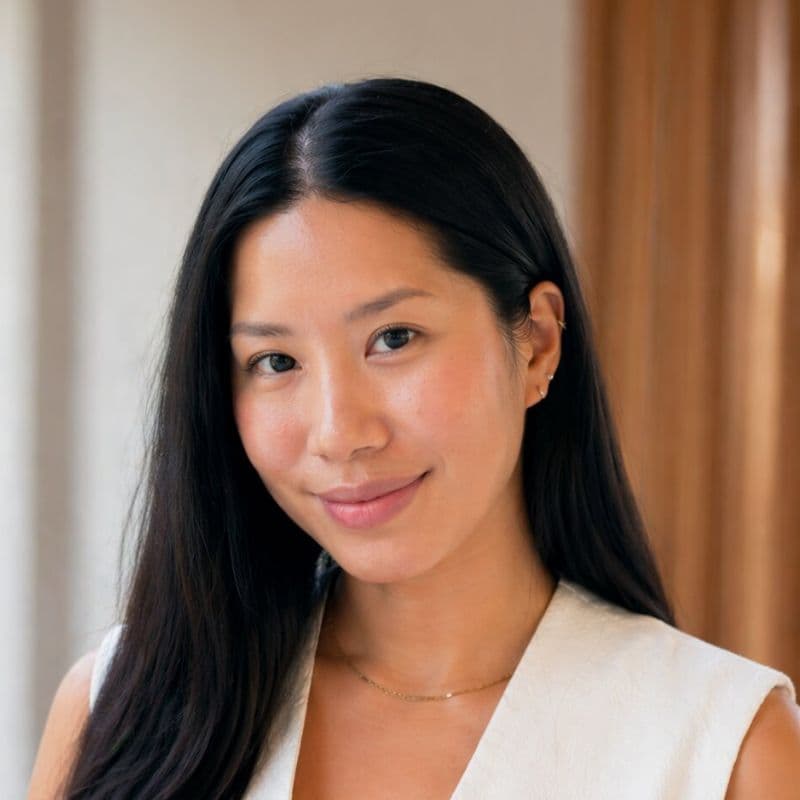
Nat
Co-founder, ClinicPins
1,200+
JCI patient-safety standards are re-audited every three years at every accredited hospital in Thailand — the same body behind top US hospitals
1975
first formal gender-affirming surgery in Thailand — Thailand has one of the longest continuous gender-affirming surgery records in the world, predating most international centres by decades
WPATH SOC v8
the current international framework for transgender health (2022). The centres we list require a WPATH-compliant referral letter before booking FFS
Surgeon credentials that matter for FFS
Medical Council of Thailand licence + Thai Board of Plastic Surgery
Every physician practising in Thailand holds a Medical Council of Thailand licence under the Medical Profession Act B.E. 2525 (1982). For FFS, the relevant next tier is Thai Board of Plastic Surgery certification via the Royal College of Surgeons of Thailand — 4–5 years of specialty plastic-surgery training after general-surgery residency, validated by a board exam. The Society of Plastic and Reconstructive Surgeons of Thailand is the specialty society whose ~475 members cover the vast majority of recommended aesthetic and craniofacial practice. This is the baseline. We verify it on the MCT public registry before listing any clinic.
Craniofacial fellowship + documented FFS caseload
FFS forehead work is craniofacial surgery. The credential that separates a competent plastic surgeon from a competent FFS surgeon is a formal craniofacial fellowship (one- or two-year post-residency training — US, European, or Korean craniofacial institutions are the most common), plus a documented per-year FFS caseload. For a surgeon you will trust with a 6–10 hour bundled operation, ask specifically: how many forehead contourings per year; how many feminizing rhinoplasties; how many mandibular angle ostectomies. A surgeon whose practice is primarily general aesthetic work is not the right surgeon for the upper third, regardless of how long their CV is.
ISAPS Active Member + WPATH-aligned consent workflow
International Society of Aesthetic Plastic Surgery Active Member status is an independent peer-verified credential — active members hold specialty board certification in their home country and are proposed by existing members. Alongside it, ask whether the clinic operates to WPATH Standards of Care version 8 — the current (2022) international framework for transgender health — and whether they require a WPATH-compliant referral letter before booking. Both are markers that the clinic takes gender-affirming care as a specific category of surgical care, not as generic aesthetic work.
What the research says
The most-cited systematic review of the FFS literature — 15 studies pooled by Morrison and colleagues in 2016 — found consistent patient-reported improvements in quality of life, social functioning, self-esteem, and gender-congruence scores across the FFS procedure set. A 247-patient cross-sectional survey (Ainsworth and Spiegel, 2010) compared transgender women who had received FFS with those who had not, and found FFS patients scored statistically higher on mental health–related quality of life and gender-congruence measures — with an effect size comparable to bottom surgery. This is the strongest published head-on comparison of FFS and gender-affirming genital surgery on patient-reported outcomes.
For safety, the published single-institution series are reassuring. Raffaini and colleagues (2016) reported a 9% revision rate across 33 consecutive patients undergoing 180 procedures — an average of five to six procedures per patient. Larger FACIALTEAM series (Capitán et al.) document comparable outcomes on forehead reconstruction combined with simultaneous hairline advancement. The technical backbone of modern FFS — Ousterhout's Type III cranioplasty for the frontal bone — has been in continuous clinical use since 1987. No formal pooled regret meta-analysis specific to FFS has yet been published, but every major institutional series reports patient satisfaction above 90%.
Risks to be aware of
FFS is not one operation — it is a bundle of three to six craniofacial procedures in a single 6–10 hour operative session. Each individual procedure has low single-digit major complication rates in experienced hands: forehead contouring carries a small risk of intra-operative dural exposure (managed during surgery with no long-term consequence in almost all cases) and typically temporary forehead paraesthesia; feminizing rhinoplasty has a higher revision rate (5–15% across plastic-surgery literature) than other FFS procedures; mandibular contouring carries a small risk of inferior-alveolar-nerve paraesthesia, most of which resolves. Tracheal shave is low-complication but must be done carefully to avoid voice change. The cumulative exposure of a full FFS is higher than any single procedure — this is the honest framing. Pick a craniofacial-fellowship surgeon with a documented FFS caseload, and plan for 14 to 21 days in-country to cover the worst of the oedema before you fly.
How to minimise risk:
- Pick a surgeon with a formal craniofacial fellowship and a documented FFS caseload in the specific procedures you want — forehead contouring especially. General aesthetic-surgery experience is not the same credential.
- Verify Medical Council of Thailand registration for any named surgeon at https://checkmd.tmc.or.th/En/v3 before you book. It takes two minutes.
- Ask the clinic how many forehead contourings, feminizing rhinoplasties, and mandibular contourings they perform per year. Specific numbers are the signal — 'we do lots' is not an answer.
- Expect a WPATH-compliant referral letter requirement. SOC v8 does not require pre-FFS hormone therapy, but most Thai clinics request one letter confirming persistent gender incongruence and informed consent.
- Plan 14–21 days in-country. Flying at 10 days is clinically safe in uncomplicated cases, but you will still have significant oedema — the extra week is for photographs and peace of mind, not for safety.
- Tracheal shave does not change vocal pitch. Vocal-pitch surgery is a separate, specialised ENT/phonosurgery procedure performed at a different centre. Most FFS patients do not need it; most FFS surgeons do not perform it.
Pricing
How much does FFS in Thailand cost by country?
Select your home country
You could save $15,000–$50,000+ per full FFS

Price ranges by clinic tier
Prices based on our 2026 Bangkok specialty-clinic research and cross-referenced with published 2024–2025 FFS pricing from Kamol Hospital, Preecha Aesthetic Institute, Chettawut Plastic Surgery Center, and Bumrungrad International. Ranges cover a full FFS (forehead + rhinoplasty + mandibular/chin contouring + tracheal shave). Partial FFS plans — upper-third only, or single-procedure add-ons — are quoted separately.
Specialty Centre — Mid-Range
$9,000–$14,000 full FFS
Save 60–75% vs 🇺🇸🇬🇧🇦🇺🇨🇦Established Bangkok specialty plastic-surgery centre with dedicated FFS programme. Thai-board-certified plastic surgeon, typically with a craniofacial-surgery focus and a documented FFS caseload. In-house operating theatre, 1–2 night inpatient stay.
- Thai Board of Plastic Surgery certified surgeon
- In-house operating theatre
- Full-FFS bundle (forehead + rhino + jaw + chin + tracheal shave)
- 1–3 nights inpatient stay
- Remote post-op follow-up over 6–12 months
Specialty Centre — Premium
$14,000–$20,000 full FFS
Save 50–70% vs 🇺🇸🇬🇧🇦🇺🇨🇦Named gender-affirming surgery institution (decades-long track record) with FFS as a dedicated service line. Senior plastic surgeon with craniofacial fellowship, ISAPS membership, and a published single-institution caseload. Structured WPATH-aligned intake.
- Craniofacial-fellowship surgeon with named FFS caseload
- ISAPS Active Member status
- WPATH SOC v8 aligned intake process
- Full-FFS bundle including patient-specific planning
- Bespoke implants available as add-on
JCI Hospital Partnership
$18,000–$28,000 full FFS
Save 35–55% vs 🇺🇸🇬🇧🇦🇺🇨🇦FFS performed by a named craniofacial surgeon inside a JCI-accredited hospital facility (Bumrungrad International, Samitivej, Bangkok Hospital). Suited to patients with co-existing medical conditions (cardiac history, diabetes, significant BMI or medication load) where hospital-tier peri-operative care matters most.
- JCI-accredited hospital (1,200+ safety standards)
- Full peri-operative medical backup
- Hospital-tier inpatient stay
- Named specialty-surgeon lead
- Best fit for patients with co-existing medical complexity
What's included — and what isn't
Typically included
- Pre-operative consultation, CT imaging, cephalometric analysis
- Surgical fees for all bundled procedures in the agreed plan
- Surgeon, anaesthetist, and surgical-assistant fees
- Operating theatre, anaesthesia consumables, hospital-stay nights (1–3)
- Titanium fixation plates/screws and standard facial implants where used
- Post-operative medications (analgesia, antibiotics, anti-inflammatories)
- Suture removal, 2–3 in-country post-op reviews through day 14–21
- Remote photo follow-up over 6–12 months
Typically not included
- WPATH-compliant referral letter (paid to home-country clinician)varies by home-country clinician
- Patient-specific 3D-printed implants above standard options฿30,000–฿120,000
- Extended inpatient stay beyond the bundled nights (per night)฿4,000–฿12,000
- Revision surgery at 6–12 months (if needed)discounted at original clinic, not free
- Vocal-pitch surgery (separate ENT centre)฿200,000–฿450,000 (if elected separately)
- Flights, hotel, transfersvaries by origin
Your Trip
What the trip for FFS in Thailand looks like
Full FFS is a single 6–10 hour operative session. 14 days on the ground is the typical minimum; 18–21 days gives photo-ready oedema reduction before long-haul travel.
Phase 1
Before you arrive
6–12 weeks out
- WPATH-compliant referral letter from a home-country clinician (most Thai clinics request one letter; specific prerequisites vary by surgeon).
- Video consultation with your chosen surgeon — CT imaging and photographs reviewed, the specific FFS plan agreed (which upper-third, middle-third, lower-third procedures).
- Pre-operative labs and clearances (ECG, bloods) organised either at home or on day one in Bangkok, depending on the clinic.
- Our team books the surgery, the 2–3 week hotel, the hospital check-in, and airport transfers.
- Stop smoking 6 weeks out (required for forehead and flap-based work). Stop hormone therapy 2–4 weeks pre-op per surgeon instruction (specific guidance varies).
“We confirm the specific procedure list in the video consultation before you fly — no surprises at the chair. For FFS more than any other treatment, the plan is the thing. Six procedures in one session needs the map drawn before we start.”
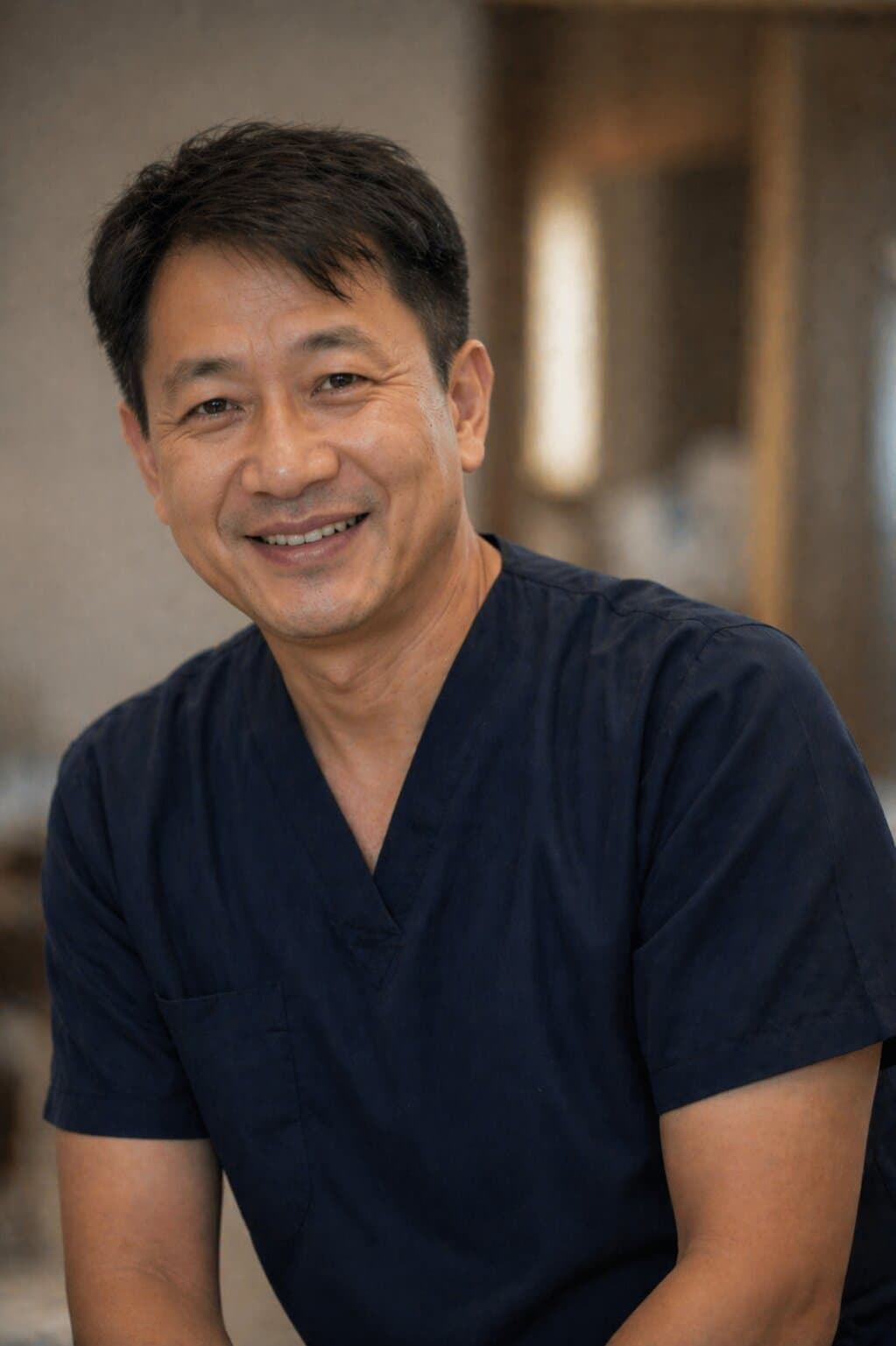
Nisha
Co-founder, ClinicPins
Phase 2
Surgery + first-week recovery
Days 1–7 on the ground
- Day 1–2 — in-person pre-operative review, final CT + photographs, consent finalisation, any last-minute plan adjustments.
- Day 3 (typical) — surgery. 6–10 hours under general anaesthesia. All bundled procedures in a single session. 1–3 nights inpatient.
- Days 4–7 — oedema peaks around day 3–5 then begins to reduce. Soft diet, head-elevated sleeping, cold-compress protocol. Drains out as output falls.
- Suture removal begins day 7 depending on suture-line location (hairline, intranasal, intraoral, cervical).
“The first week is the hard week. Swelling peaks, you'll barely recognise yourself, and that is normal. We check in daily, we bring soft food to the hotel, and we coordinate anything the surgeon asks for. The worst of it is behind you by day seven.”
Nat
Co-founder, ClinicPins
Phase 3
Recovery week two + flight home
Days 8–21
Days 8–14 (oedema reduction)
Remaining suture lines removed, dressings stepped down, oedema visibly reducing by the day. Light ambulation, no strenuous exercise. Final in-country surgeon review typically day 10–12.
Days 14–21 (buffer week for photos)
Clinically safe to fly from day 10 in uncomplicated cases; practically, patients who fly at 10 days will still have significant oedema. The extra week lets you arrive home photograph-able, not for safety reasons.
Final in-country review + travel clearance
Surgeon signs off on flight readiness. Written post-op plan for home-country GP and/or plastic surgeon, plus a 6-month and 12-month photo follow-up scheduled before you leave.
Months 1–12 (remote follow-up)
Subtle residual oedema resolves over 3–6 months; final nasal and chin refinement at 6–12 months. Any planned revision is scheduled at the 12-month mark.
“Week two is the better week. You can see the shape coming through, you're off the heavy medications, and by day 14 most patients are ready to be seen again. Day 21 is the day most people feel genuinely ready to get on a plane and be at home.”
Nisha
Co-founder, ClinicPins
That’s the plan. Yours gets built around your dates.
Tell us roughly when you’re free and we’ll come back with a schedule that fits, including recovery time before you fly.
Recovery
Where to recover in Thailand
FFS recovery is about low-stimulation rest with the clinic close by. Our concierge team books a hotel fifteen minutes from the surgeon for the in-country weeks so you are never far from a review appointment.
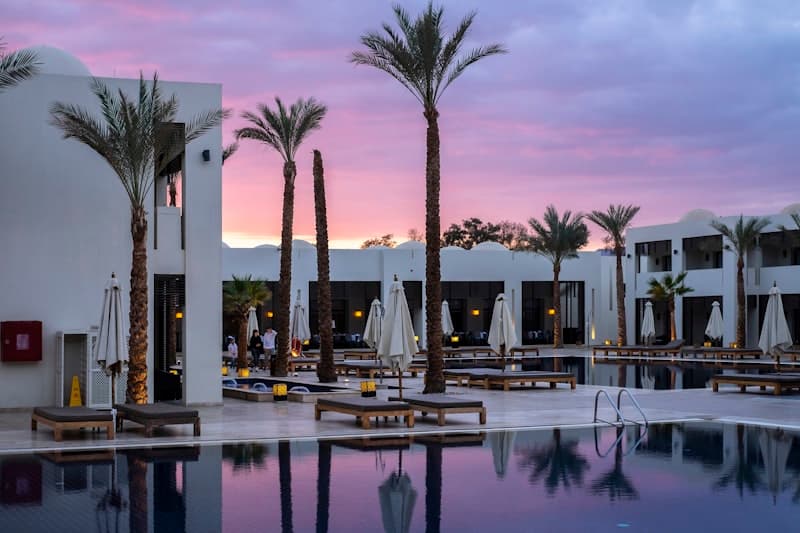
Stay in Bangkok
Sukhumvit or Silom keeps you fifteen minutes from the clinic. Rooftop pools, 24-hour pharmacy access, and BTS access to anywhere if you want a quiet lunch out in week two. Easiest logistics — no domestic flights, no hotel moves, clinic close by if anything surprises us.
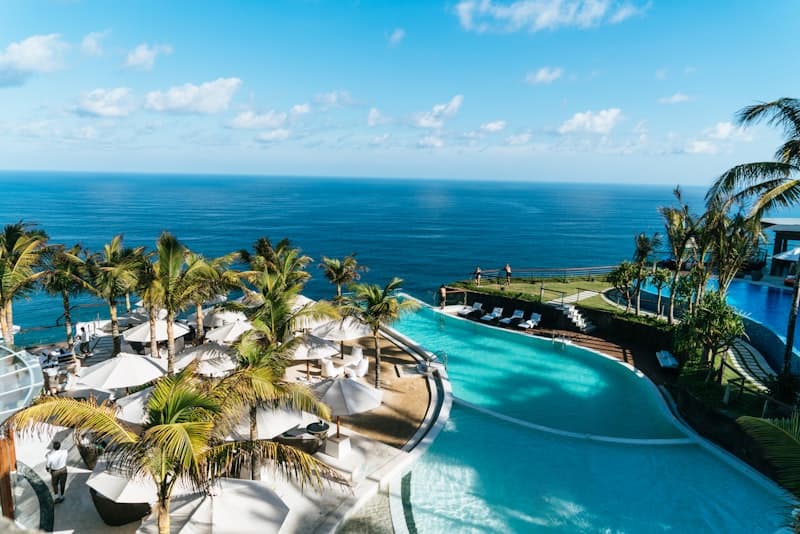
Short recovery move to Hua Hin
Three-hour drive south, beach-town pace, fewer crowds. Some patients move to Hua Hin at day 10 once the heavy swelling has settled — quieter environment for the second recovery week. Our team arranges the transfer.
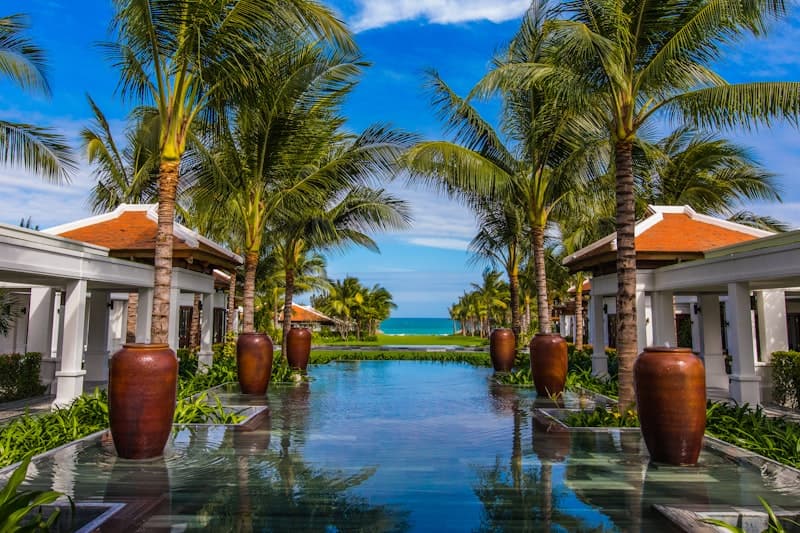
Stay-put is the default
Unlike dental or LASIK trips, FFS is not an 'extend your holiday' treatment. Most patients stay put in Bangkok for the full 14–21 days. Active sightseeing, heat-intense outdoor activities, and scuba/diving are off the menu until 6–8 weeks post-op. The recovery weeks are about rest.
“This is a recovery trip, not a holiday. We book a quiet hotel close to the clinic, we check in every day through week one, and we keep the environment low-stimulation. Save the island extension for a return trip after the six-month follow-up photos.”
Nat
Co-founder, ClinicPins
Options
The FFS menu
FFS is a bundle of craniofacial procedures, selected by your surgeon from the three facial thirds. These are the six most commonly included. Your plan might be any combination — most patients choose four to six; some choose upper-third only.
Forehead contouring (Ousterhout Type III)Most-impactful
Osteotomy of the anterior table of the frontal sinus with bone remodelling and rigid fixation using titanium plates. Reduces frontal bossing and recontours the supraorbital rims — the single most-impactful procedure in most FFS plans on how the face reads. Ousterhout's original 1987 technique remains the craniofacial reference, with refinements documented across the Spiegel and Capitán series.
Best for
Type III frontal-bone anatomy (the most common pattern in transgender women seeking feminization) — where the frontal-sinus anterior wall protrudes and simple burring would compromise the sinus.
Operative time
2–3 hours when done in isolation; part of the 6–10 hour full-FFS session when bundled.
Recovery specifics
Coronal or pretrichial incision; forehead paraesthesia (numbness) for 6–12 months is expected and typically resolves.
Permanence
Titanium hardware remains in place permanently; removal is not routinely required and is rarely requested.
$3,500–$6,500 when done in isolation
Save 55–70% vs home“The forehead is the single biggest change on most faces. Everyone focuses on the nose and the jaw, but the forehead — the brow ridge, the hairline shape, the curve above the brow — is what the eye reads first. This is the procedure a craniofacial-fellowship surgeon earns their fee on.”
Nat
Co-founder, ClinicPins
Feminizing rhinoplasty
Dorsal height reduction, tip refinement and rotation, nasal shortening, and osteotomy to narrow the bony base — the well-described feminizing principles from Bellinga et al.'s JAMA Facial Plastic Surgery paper. Commonly bundled with forehead surgery so the upper- and middle-third work progresses in one planned session. If you are considering nose-only work without the rest, our standalone rhinoplasty in Thailand page covers that path.
Best for
Most FFS patients. Bundled in roughly three-quarters of full FFS plans in published series.
Operative time
2–3 hours within the bundled session.
Revision rate
5–15% across plastic-surgery rhinoplasty literature — higher than other FFS components. Over-reduction of the dorsum is the most common aesthetic concern.
Final result
Subtle changes continue out to 6–12 months as residual oedema resolves.
$3,000–$5,500 when done in isolation
Save 50–70% vs home“A feminizing rhinoplasty is not the same as a general aesthetic rhinoplasty — the end-point is different, the dorsum is handled differently, the tip rotation is different. Ask the surgeon specifically about their feminizing rhinoplasty volume, not their total rhinoplasty volume.”
Nisha
Co-founder, ClinicPins
Hairline advancement (or hair transplant)
Forward advancement of the hairline via pretrichial incision and scalp-flap mobilisation, often combined with forehead contouring through the same coronal or pretrichial incision. For patients with significant temporal recession or androgenic alopecia, a separate hair transplant in Thailand via follicular-unit extraction is the alternative — sometimes done at the same time as FFS, sometimes as a separate trip.
Best for
Elevated or M-shaped hairline, temporal recession. Not suitable for significant androgenic alopecia.
Combined approach
When forehead contouring and hairline advancement are done together via one coronal incision, the shared incision heals as one suture line — less cumulative scar burden.
Alternative
Follicular-unit-extraction hair transplant — 2,000–4,000 grafts to rebuild hairline density, 6–12 months for full growth-out.
$2,500–$5,000 (advancement) or $4,000–$8,000 (hair transplant)
Save 50–65% vs home“Hairline advancement and forehead contouring are the natural pair. One long incision, two procedures, same recovery. Patients with denser native hair usually pick advancement; patients with thinning hair usually pick a transplant.”
Nat
Co-founder, ClinicPins
Mandibular angle contouring (jawline tapering)
Intraoral ostectomy of the mandibular angle to narrow the posterior jaw and reduce the gonial-angle prominence. Performed intraorally — no external scar. Takes 2–3 hours when done as part of a full-FFS bundle.
Best for
Square or prominent jawline patterns.
Sensory considerations
Inferior alveolar nerve paraesthesia (numbness of the lower lip and chin) is a known risk, typically transient; permanent numbness is uncommon in experienced hands.
Flight-readiness
Intraoral incisions need the full 48–72 hour buffer before long-haul flights (included in the 14–21 day in-country plan).
$2,500–$4,500 when done in isolation
Save 55–70% vs home“The jaw takes patience to judge. Day one looks swollen and strange; day 14 looks tighter; month three looks like you. Do not judge a jaw contour from a one-week photograph.”
Nisha
Co-founder, ClinicPins
Chin contouring / genioplasty
Reduction of chin width via burring or ostectomy, or a sliding genioplasty to reposition the chin point vertically or horizontally. Often the procedure that closes the whole plan — a repositioned, narrower, vertically-oriented chin is a defining feminine-pattern feature and the piece that makes the overall face read coherently.
Best for
Most full-FFS plans. Approximately two-thirds of published FFS series include a chin procedure.
Techniques
T-osteotomy reduction (width), burring (width, subtle), or sliding genioplasty (reposition in any plane).
Approach
Typically intraoral — no external scar.
$2,000–$4,000 when done in isolation
Save 55–70% vs home“The chin is the plan's closing piece. When the forehead, nose, and jaw are all moving, the chin needs to match — not square, not pointed, the right proportion vertically. A good genioplasty reads as no chin work at all.”
Nat
Co-founder, ClinicPins
Tracheal shave (chondrolaryngoplasty)
Reduction of anterior thyroid-cartilage prominence via a small cervical incision hidden in a natural neck crease. Approximately 1 hour of operative time — a low-complication adjunct easily bundled with other FFS procedures. Wolfort's 1990 paper described the modern technique; Spiegel (2006) provides the authoritative contemporary reference on when tracheal shave (aesthetic) and vocal-pitch surgery (separate, ENT/phonosurgery specialty) should be distinguished.
Best for
Visibly prominent thyroid cartilage ('Adam's apple').
Does not change
Vocal pitch. That is a separate, more specialised intervention performed at a different centre — most FFS patients do not need it; most FFS surgeons do not perform it.
Scar
Small cervical scar, placed in a skin crease; typically heals well.
$800–$2,000 when done in isolation
Save 50–70% vs home“Tracheal shave is the quiet addition. It takes an hour, the scar hides in a neck crease, and for the right anatomy it is the one procedure you notice in the mirror every morning afterwards.”
Nisha
Co-founder, ClinicPins
Partner Hospitals
FFS centres in Bangkok
Three centres across the tier range. All are Medical Council of Thailand–licensed, Thai-Board-of-Plastic-Surgery-certified, and operate to WPATH Standards of Care version 8. Each publishes structured FFS packages that we verify before listing.
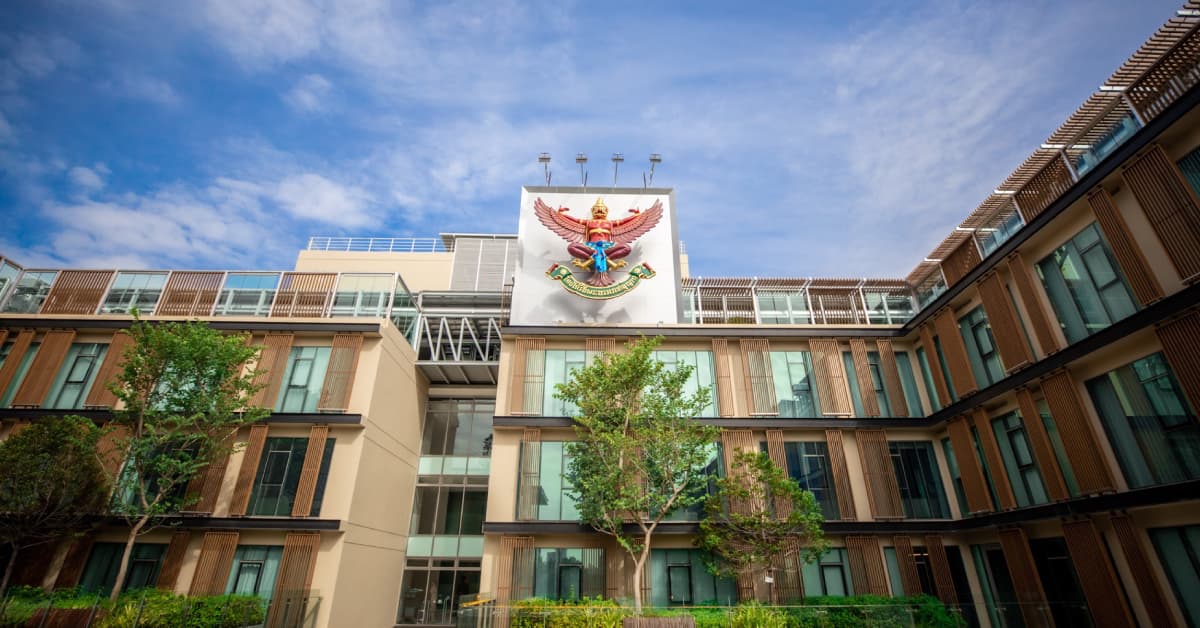
Bangkok International Hospital
JCISoi Soonvijai, Bangkok
JCI-accredited since 2007
Flagship of the Bangkok Hospital Group with multilingual staff and a full surgical program across cosmetic, dental, and general medicine.
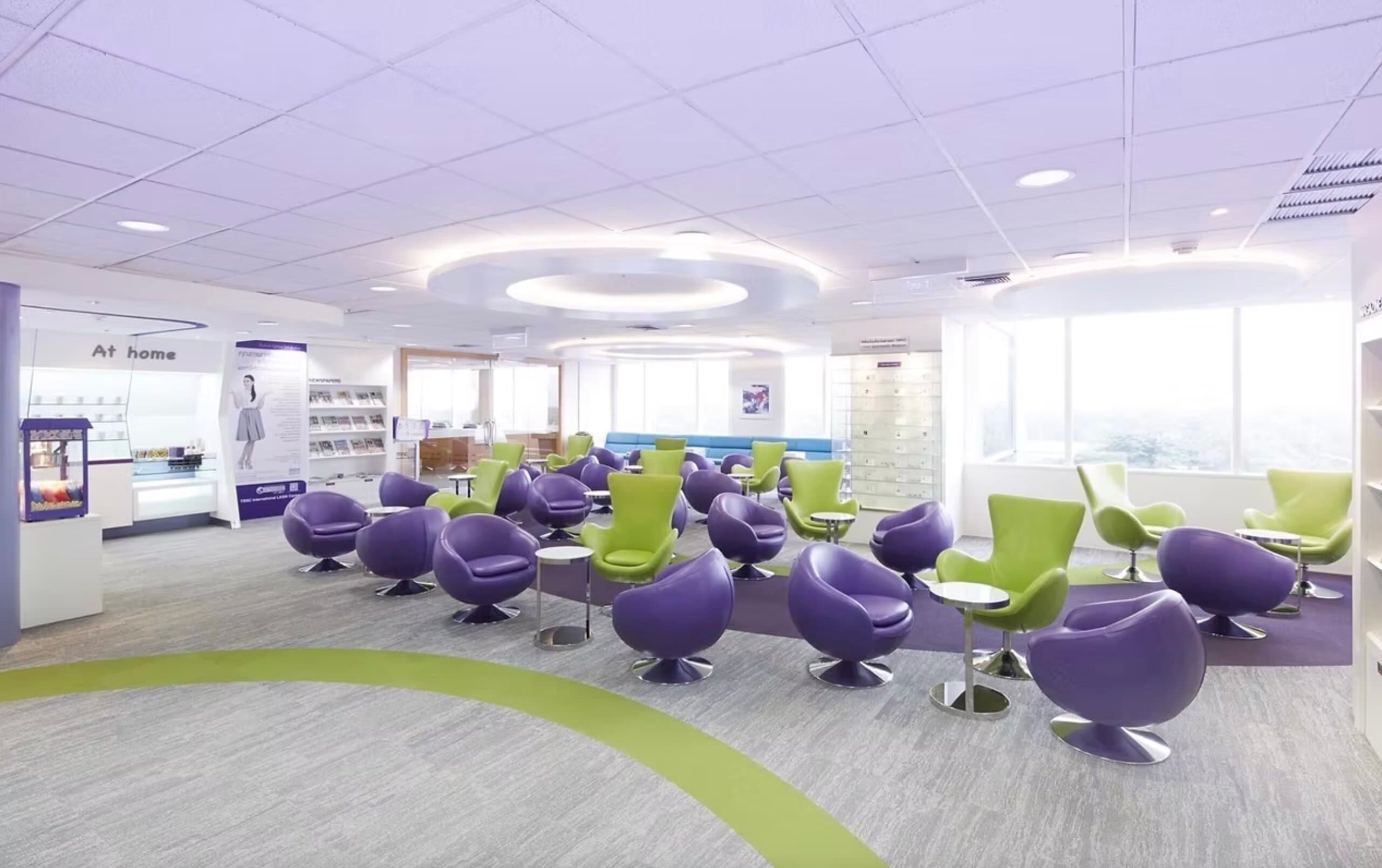
TRSC International LASIK Center
EyeSilom, Bangkok
Dedicated laser vision-correction centre — 102,000+ eyes treated
A standalone eye and vision centre led by medical director Dr. Ekktet Chansue, offering ReLEx SMILE, FemtoLASIK, PRK, and ICL alongside cataract and retinal care.
Not sure which hospital?
Our team can match you with the right hospital based on your goals, body type, and budget.
Talk to UsYour Surgeon
How to choose your FFS surgeon
FFS is craniofacial surgery with aesthetic endpoints. The surgeon who is right for you is a plastic surgeon with craniofacial fellowship training, documented FFS-specific caseload, and a WPATH-aligned intake process. Six questions filter for the surgeons who take this seriously.
Every physician in Thailand must hold an active MCT licence under the Medical Profession Act B.E. 2525 (1982). Verify at https://checkmd.tmc.or.th/En/v3 using the surgeon's full name — it takes two minutes. Also ask: who is the lead surgeon doing your procedures — is that the person listed on the clinic's website, or a named associate? Continuity matters on a 6–10 hour bundled operation.
Thai Board of Plastic Surgery certification via the Royal College of Surgeons of Thailand is the baseline. Craniofacial fellowship — a one- or two-year post-residency training, often at a US, European, or Korean craniofacial institution — is the FFS-specific differentiator. Ask for the institution and year of the fellowship.
The most-asked FFS-specific question. A number in the tens to low hundreds per year is a specialty-volume signal; a number in single digits is a concern. Ask the same about feminizing rhinoplasty and mandibular angle contouring — FFS surgeons often have asymmetric volume across the three facial thirds, and you want the specific procedure volume, not an aggregate 'aesthetic surgery' number.
The International Society of Aesthetic Plastic Surgery's active membership is an independent peer-verified credential. Active members hold specialty board certification in their home country and are proposed by existing ISAPS members. Verify at https://www.isaps.org/discover/find-a-surgeon/. Not every excellent surgeon is an ISAPS member, but it is a useful independent second signal.
SOC v8 (2022) is the current international framework for transgender health. For FFS, SOC v8 does not mandate pre-operative hormone therapy — a common point of confusion. Most Thai specialty clinics require one WPATH-compliant referral letter confirming persistent gender incongruence and informed consent. Ask what their specific letter requirement is and whether additional documentation (social-transition history, mental-health stability) is expected.
FFS has a long refinement tail — residual oedema resolves over 3–6 months; final nasal and chin refinement at 6–12 months. The clinic should commit to scheduled photo follow-up at 3, 6, and 12 months before you fly, with a clear written revision policy if a revision is indicated at the 12-month mark.
How we verify
We ask for the Medical Council of Thailand licence number, proof of Thai Board of Plastic Surgery certification, proof of craniofacial fellowship, the specific per-procedure FFS caseload per year, and a written WPATH-aligned intake workflow. We verify the MCT registration at https://checkmd.tmc.or.th/En/v3 and the ISAPS status at https://www.isaps.org/discover/find-a-surgeon/ independently. If a clinic won't share these before you book, we don't recommend it.
Patient Stories
What patients say
All reviews are from verified patients who received treatment at the clinic they're reviewing. Placeholder cohort until our 2026 patient-photos programme ships.
“Quoted AUD $45,000 at home for the full plan. Kamol did the same six-procedure FFS for AUD $17,500 across an 18-day stay in Bangkok. Daily check-ins from the concierge team in week one, surgeon reviews on day three, seven, ten, and fourteen. Flew home on day 18 feeling ready to be seen again.”
Alex M.
Full FFS (forehead + rhino + chin + tracheal shave), Kamol
“Did not need the lower third — my jaw and chin read fine — so I only wanted forehead and hairline work. PAI quoted $7,800 for upper-third FFS with simultaneous hairline advancement vs $22,000 at my home-state specialty practice. Craniofacial-fellowship surgeon, clean result, photos at 6 months almost indistinguishable from the computer planning simulation.”
Jordan P.
Upper-third FFS (forehead + hairline + brow), PAI
“Three-procedure plan, not a full FFS. Chettawut priced it at £9,400 against a London private quote of £32,000 for the same plan. Transparent per-procedure pricing, structured 15-day programme with written day-by-day schedule before I flew. Final result at 9 months — natural, subtle, exactly what I was after.”
Sam R.
Forehead + rhino + tracheal shave, Chettawut
All photos shared with explicit written consent. Results vary by individual.
See more treatmentsResearched & written by
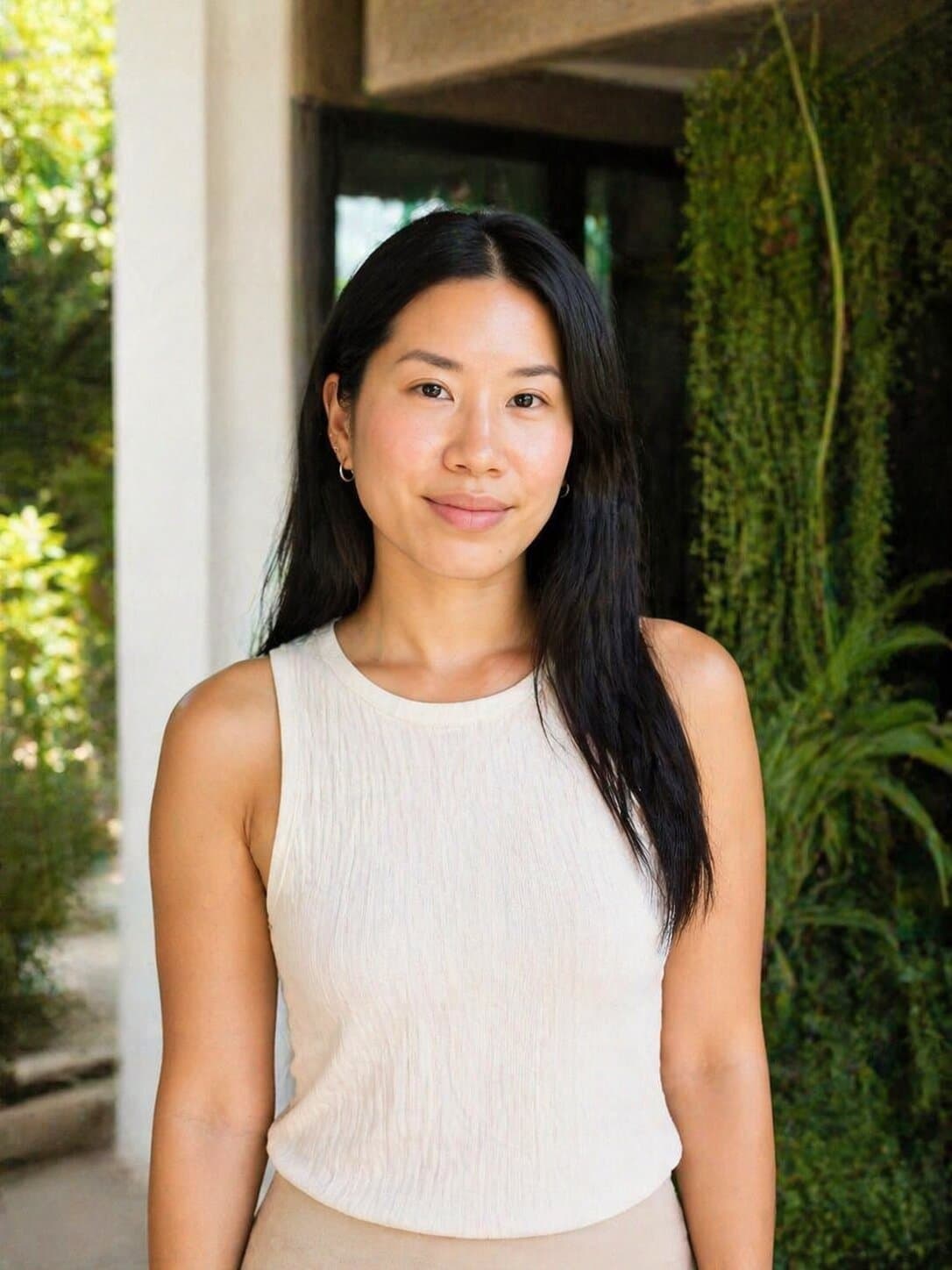
Nat
Co-founder, ClinicPins
Born and raised in Bangkok. Educated in the US. Personally visited every clinic we recommend.
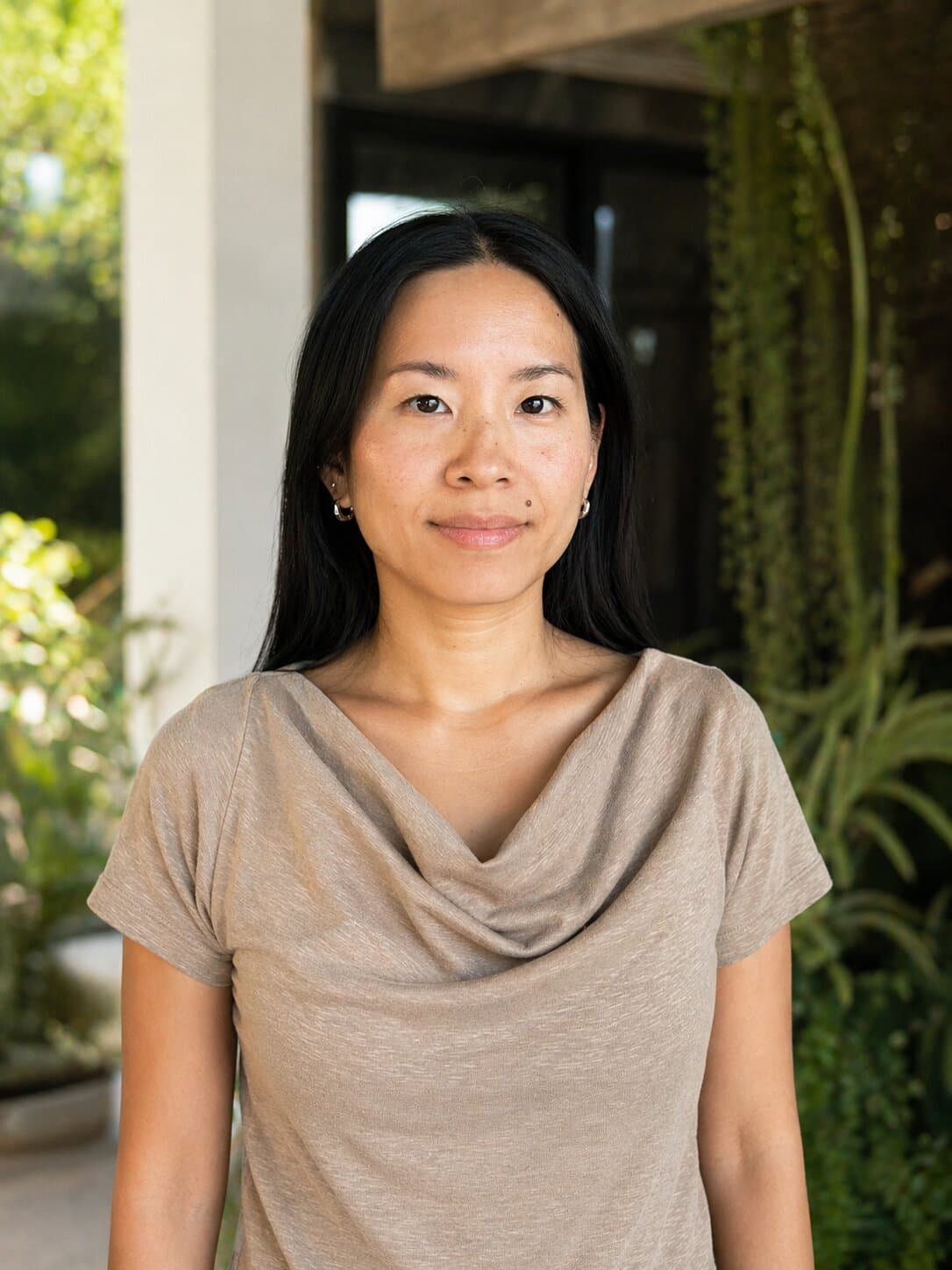
Nisha
Co-founder, ClinicPins
Fluent in Thai and English. Bridges the gap between international patients and Thai clinics.
We are concierge coordinators, not medical professionals. This content is for informational purposes only and does not constitute medical advice — always consult a board-certified surgeon for personalised recommendations. Meet the team
FAQ
Frequently asked questions
A full FFS at a specialty Bangkok centre runs US $9,000–$18,000 (mid-range) to $18,000–$28,000 (JCI-hospital-performed or premium specialty tier). An upper-third-only plan (forehead + hairline + brow) runs $4,000–$8,000 at the mid tier. A single-procedure add-on during a face-cluster trip — for example, a tracheal shave added to a rhinoplasty trip — runs $800–$1,500. Every quoted package includes surgical fees, anaesthesia, 1–3 nights inpatient stay, titanium hardware, and in-country post-op reviews. Home-country WPATH-compliant referral letters, patient-specific 3D-printed implants, and revision surgery at 6–12 months are quoted separately. US retail pricing for the same full FFS bundle is $30,000–$70,000+ at named specialty practices; UK £20,000–£45,000 private; Australia AUD $30,000–$60,000. Savings on a full FFS typically land in the $15,000–$40,000+ range against home — the largest absolute-dollar savings of any medical-tourism category.
For a full FFS (forehead + rhinoplasty + mandibular/chin contouring + tracheal shave): 14 days is the typical minimum, 18–21 days gives better oedema reduction before you fly. You are clinically safe to fly from around day 10 in uncomplicated cases, but the extra week is for photographs and social readiness, not for safety. For an upper-third-only plan: 10–14 days is usually enough. For a single-procedure add-on to a face-cluster trip (tracheal shave, chin reduction alone): the trip is governed by the larger procedure. The full oedema resolution is 3–6 months; final nasal and chin refinement at 6–12 months — handled by remote photo follow-up after you are home.
No. This is a common point of confusion. WPATH Standards of Care version 8 (2022) does not mandate a specific period of hormone therapy before FFS — FFS is treated as a distinct category from genital surgery under v8. What the established Thai centres do require is one WPATH-compliant referral letter from a home-country mental-health or gender-specialty clinician confirming persistent gender incongruence and informed consent. Specific additional prerequisites (documented social transition, mental-health stability, age thresholds) vary by surgeon. The virtual consultation is where the specific intake requirements get confirmed for your case.
Generally no. Most established centres schedule FFS and gender-affirming bottom surgery as separate trips — typically 3–6 months apart — because the anaesthetic load of a combined 6–10 hour FFS plus a 4–6 hour vaginoplasty is high, and the recovery profiles are different (FFS is stay-put in Bangkok; bottom surgery needs supervised dilation training). Some patients do FFS first (shorter trip, lower complexity); others do bottom surgery first (longer trip, more supervised recovery). The ordering is usually surgeon- and personal-preference-driven rather than clinically dictated. The broader pathway — bottom surgery, orchiectomy, masculinizing top surgery — is covered on our gender-affirming surgery in Thailand page.
No to both. Feminizing breast augmentation is a separate chest procedure — see breast augmentation in Thailand. Most surgeons defer feminizing breast augmentation until at least 12 months of feminizing hormone therapy to allow native breast development first. Vocal pitch surgery (cricothyroid approximation, glottoplasty) is a specialised ENT/phonosurgery procedure performed at dedicated voice-surgery centres — most FFS surgeons do not perform it, and most FFS patients do not need it. A tracheal shave reduces thyroid-cartilage prominence but does not raise vocal pitch — this is the most common confusion.
Yes. Every centre we recommend runs a video consultation first — typically 45–60 minutes. You will share photographs (front, profile, oblique, smile) and, ideally, a CT scan or panoramic imaging done locally at home. The surgeon agrees the specific procedure list in the consultation, provides a written plan with inclusions and exclusions, and sets the WPATH-letter requirement for your case. The final consent happens in-person on day one of your trip.
FFS has a long refinement tail — subtle oedema resolves over 3–6 months, and final nasal and chin refinement continues to 6–12 months. Most patients do not need a revision; the large published series report revision rates in the single digits. When a revision is indicated, the standard arrangement is a return trip at the 12-month mark at a meaningfully reduced clinic fee (you still pay surgeon and theatre time; the clinic typically does not recharge for clinic-side costs if the revision is clearly theirs). Home-country emergency work (suture issues, minor wound problems) is handled by your home plastic surgeon with written guidance from the Bangkok clinic; we send that paperwork home with you before you fly.
Still have questions? Talk to our concierge team
Ready to start planning?
Tell us what you're considering — even if you're just exploring. No commitment, no pressure.
ClinicPins receives referral fees from partner hospitals. This does not affect our recommendations or your price. Read our editorial policy.
Related
Related treatments
Gender-Affirming Surgery
Bottom surgery (vaginoplasty, phalloplasty, metoidioplasty), orchiectomy, and masculinizing top surgery — the broader gender-affirming surgical pathway.
Learn more
Rhinoplasty
Nose surgery as a standalone procedure — for patients who want a nose-only change rather than a bundled FFS.
Learn more
Breast Augmentation
Feminizing top surgery — typically deferred until 12+ months of feminizing hormone therapy to allow native breast development first.
Learn more