Gynecomastia Surgery
in Thailand.
Gynecomastia surgery in Thailand is a 5–7 day trip: chest contouring with a Thai-board-certified plastic surgeon, drain removal at days 2–4 if placed, then home once your surgeon clears the flight. Our Bangkok team books the clinic, the surgeon, and a quiet recovery hotel 15 minutes from your follow-ups — privacy matters, and we plan for it. We've personally visited every clinic we recommend.
Last updated September 2026

“Finally took my shirt off at the pool.”
Marcus L. · Brisbane, AU
Gynecomastia in Thailand — about half the US self-pay price.
A combined lipo + excision gynecomastia at a ThPRS-certified Bangkok specialty clinic runs $2,500–$4,500 all-in; premium JCI-hospital care at Bumrungrad, Samitivej, or BNH runs $4,500–$8,500 for grade IIb–III cases with skin excision. That's well below the US all-in self-pay quote of $4,800–$15,000 (surgeon fee alone averages $5,587 per ASPS 2024 statistics), Australia (AUD $9,500–$16,000), the United Kingdom (£4,500–£8,500), and Canada (CAD $7,500–$13,000). Same FDA-cleared VASER technology, same ISAPS-member surgeons — what differs is the Bangkok cost base, not the standard of care.
🇹🇭Thailand
$2,500–$8,500
all-in, technique-dependent
- Plastic surgeon + anaesthetist fees
- Operating theatre and day-surgery or overnight admission
- General anaesthesia or MAC sedation
- Stage-1 compression vest, drains, dressings, antibiotics
- 1–3 post-op reviews in Bangkok (drain removal, pre-flight check)
- Histopathology on resected glandular tissue
Other Countries
- Grade IIb–III skin excision adds $1,000–$2,500 for longer operating time
- Second-stage compression vest for weeks 3–6
- No concierge or travel coordination
Is gynecomastia surgery in Thailand safe?
Yes — when you pair a ThPRS-certified plastic surgeon with a JCI-accredited facility. Gynecomastia is a low-morbidity day-surgery procedure at good Bangkok clinics.
Patient satisfaction runs 84.5%–100% across 17 studies — one of the highest ranges in plastic surgery. Thailand hosts more JCI-accredited healthcare organisations than any country in Southeast Asia, re-audited every three years against over 1,200 safety measures.
The work we do is verifying credentials, facility standards, and that the surgeon you are paired with has real gynecomastia volume — not just a general plastic-surgery licence. Board certification through the Royal College of Surgeons of Thailand plus membership of ThPRS is the standard we insist on.

Nat
Co-founder, ClinicPins
84.5–100%
patient satisfaction across 17 studies and 1,112 patients in a PRS Global Open 2020 systematic review of gynecomastia surgical management
65+
JCI-accredited hospitals across Thailand — the most in Southeast Asia — re-audited on a three-year cycle against 1,200+ safety measures
FDA-cleared
VASER ultrasound technology since 2002 for chest liposculpture — the same system your home-country surgeon would use for a Simon grade I–IIa case
Surgeon credentials that matter
Medical Council of Thailand + Thai Board of Surgery
Every physician practising in Thailand must hold an active Medical Council of Thailand licence. For gynecomastia, the surgeon must also be certified by the Thai Board of Surgery with a plastic-surgery sub-specialty. The public CheckMD licence-verification tool lets you confirm any surgeon's registration number directly — do it before your consultation, not after.
ThPRS or ISAPS membership
Senior plastic surgeons carry specialty society credentials on top of the statutory licence: ThPRS (Society of Plastic and Reconstructive Surgeons of Thailand — board-certified members only) or ISAPS Active Member status. ISAPS membership requires specialty-board certification plus existing-member sponsors — peer-verified, not self-declared.
Gynecomastia-specific case volume
Past a baseline credential, volume is what matters. We filter for surgeons who do gynecomastia weekly — not monthly — and specifically those comfortable with grade IIb–III skin-excision cases. A generalist plastic surgeon and a chest-contouring specialist are different propositions for this operation.

What the research says
Gynecomastia has one of the highest patient-satisfaction rates in plastic surgery. A Plastic and Reconstructive Surgery Global Open 2020 systematic review of 17 studies and 1,112 patients pooled patient satisfaction at 84.5%–100%, with psychosocial improvement reported by 78.9% of patients. A wider 2022 Aesthetic Plastic Surgery review of 94 articles and 7,294 patients confirmed hematoma as the most common complication — 5.8% in combined lipo + excision series versus over 22% in isolated-excision series. The headline message: combining liposuction with glandular excision lowers the complication profile and remains the default for Simon grade IIa–IIb cases. Gynecomastia also ranks among the top three surgical procedures men request worldwide in the ISAPS Global Survey 2024.
Technique is matched to Simon's 1973 grading system (Grades I / IIa / IIb / III) and whether the excess is fat, gland, or both. Grade I with pure pseudogynecomastia (no glandular disc) is a liposuction-only case — essentially chest liposuction in Thailand. Grade IIa with a dense retroareolar disc needs glandular excision, most often paired with liposuction in one procedure. Grade IIb adds a periareolar skin tuck. Grade III with pendulous tissue needs a full subcutaneous mastectomy with skin excision — the higher-risk pathway, but with contemporary techniques still delivering the same satisfaction range. Anabolic-steroid users are a growing surgical indication: once the glandular tissue fibroses, medications (tamoxifen, SERMs) rarely work and surgery becomes the only definitive treatment.
Risks to be aware of
Gynecomastia surgery is low-morbidity compared with most plastic-surgery procedures, but it is still surgery. The FDA-cleared VASER system and standard suction-assisted liposuction both carry the same adverse-event profile documented in the pooled systematic reviews above. The adverse events to track, in order, are hematoma, seroma, contour irregularity, transient nipple-areola sensation change, and, in higher grades, scar quality and asymmetry. Combining lipo with excision roughly halves hematoma risk versus isolated excision.
How to minimise risk:
- Hematoma 5.8% in combined-technique series; higher in isolated-excision cases. Bangkok clinics use meticulous intra-operative hemostasis and selective drains to reduce this.
- Seroma 2.4% pooled. Compression vest worn 24/7 for the first 2 weeks is the single biggest mitigation.
- Transient nipple-areola hypoesthesia 3–19% in reported series; permanent sensation loss is rare (under 2%).
- Contour irregularity — usually correctable with a minor revision at 6 months. Revision rates run 0–14% across the literature; good surgeon selection pushes this to the lower end.
- Recurrence is rare in non-hormonal cases. Anabolic-steroid use, ongoing hormonal imbalance, or untreated hyperprolactinemia need the underlying driver addressed first — otherwise tissue can regrow.
Pricing
How much does gynecomastia surgery in Thailand cost by country?
Select your home country
You could save $2,300–$9,500 saved

Price ranges by clinic tier
Prices based on our 2026 clinic research, cross-referenced with published Thai specialty and hospital service pages (Bumrungrad, Samitivej, BNH) and verified with ThPRS-certified plastic surgeons. Ranges assume combined lipo + glandular excision — the default technique for Simon grade I–IIb. Grade IIb–III skin-excision cases add $1,000–$2,500 for longer operating time and, where indicated, overnight admission.
Budget Clinic
$1,800–$2,800
Save 60–75% vs 🇺🇸🇬🇧🇦🇺🇨🇦Independent plastic-surgery clinic, ThPRS-member surgeon, day-surgery facility. Suits straightforward Simon grade I–IIa cases with combined lipo + excision technique. Grade IIb–III skin-excision work rarely offered here.
- Combined lipo + glandular excision (grade I–IIa)
- MAC sedation or general anaesthesia
- Day-surgery discharge
- Stage-1 compression vest and 1–2 post-op reviews
Mid-Range Specialty
$2,500–$4,500
Save 45–65% vs 🇺🇸🇬🇧🇦🇺🇨🇦ThPRS-certified plastic surgeon in an accredited specialty clinic. Full technique range — liposuction-only, glandular excision, combined, and periareolar skin tuck for grade IIb. Most international gynecomastia patients sit in this tier.
- All techniques up to grade IIb periareolar skin tuck
- General anaesthesia with board-certified anaesthetist
- Drains + selective overnight observation
- 2–3 post-op reviews in Bangkok
Premium International
$4,500–$8,500
Save 25–55% vs 🇺🇸🇬🇧🇦🇺🇨🇦JCI-accredited hospital setting — Bumrungrad, BNH, Samitivej. ISAPS-member plastic surgeon with case volume in grade IIb–III and revision work. Full skin-excision mastectomy technique, overnight admission, histopathology reporting.
- All techniques including grade III skin-excision mastectomy
- Board-certified anaesthetist, overnight admission
- Hospital-grade sterilisation and follow-up
- Revision and post-weight-loss cases handled routinely
- Histopathology reporting included
What's included — and what isn't
Typically included
- Pre-op consultation + chest exam (hormone / thyroid / testicular screen if flagged)
- Plastic surgeon and anaesthetist fees
- Operating theatre and day-surgery or overnight admission
- General anaesthesia or MAC sedation
- Stage-1 compression vest, drains (when placed), dressings, antibiotics, analgesia
- 1–3 post-op reviews in Bangkok (drain removal, sutures, pre-flight check)
- Histopathology on resected glandular tissue
Typically not included
- Pre-op bloodwork (FBC, clotting, hormone panel)฿2,500–฿6,000
- Testicular ultrasound if clinically indicated฿1,500–฿3,500
- Chest ultrasound or mammogram if indicated฿1,800–฿4,000
- Stage-2 compression vest (weeks 3–6)฿1,500–฿3,000
- Recovery hotel (5–10 nights)฿2,500–฿8,000 per night
- Grade IIb–III skin excision surcharge+$1,000–$2,500
- Revision surgery (if needed, typically at 6 months)฿30,000–฿90,000
- Flights, airport transfers, insurancevaries by origin
Your Trip
Your gynecomastia trip to Thailand
Gynecomastia is a 5–7 day trip for Simon grade I–IIa and a 7–10 day trip for grade IIb–III. Most patients arrive on a Sunday, operate on Monday, have drains out by day 2–3, a day-5 surgeon review, and fly home from day 5–7 (or 7–10 for skin-excision cases). Here's what each stage looks like.
Phase 1
Before you arrive
4–6 weeks out
- Send recent photos (front, three-quarter, side, arms-raised, arms-flexed) and a short medical history — including any anabolic-steroid or testosterone-therapy history and current medications — to our team on WhatsApp.
- Virtual consultation with your chosen surgeon to confirm your Simon grade (I / IIa / IIb / III), the technique (liposuction-only, glandular excision, combined, or skin-excision mastectomy), and the realistic shape goal.
- Hormone / thyroid / testicular screen via your GP at home if flagged. Steroid-induced or endocrine-driven gynecomastia needs the underlying driver addressed first.
- Stop all nicotine (cigarettes, vapes, patches, gum) at least 4 weeks before surgery. Stop aspirin, NSAIDs, and fish oil 10–14 days pre-op. Disclose every supplement and herbal product to your anaesthetist.
- Plan 5–7 days in Bangkok for Simon grade I–IIa; 7–10 days for IIb–III. Book flexible return flights in case the surgeon extends clearance by a day or two.
“Before anything else I ask you two questions — have you ever used anabolic steroids, and have you already had a hormone panel. Both change the technique plan. We don't want surprises on the day.”
Nat
Co-founder, ClinicPins
Phase 2
Surgery day and the first night
Day 0 to Day 2
- Early admission to the clinic or hospital — typically 7:00 AM — for final consent, bloodwork review, and anaesthesia workup.
- Surgery runs 1.5–3 hours depending on Simon grade and whether skin excision is needed. General anaesthesia is standard; MAC with local is an option for small grade I cases.
- Overnight observation at premium-tier clinics for grade IIa+ cases; day-surgery discharge is standard for pure grade I liposuction-only work.
- Compression vest on immediately in the recovery bay, worn 24/7 for the first 2 weeks.
- Drains — when placed — are monitored overnight. Resected glandular tissue is sent for histopathology.
“Surgery day in Bangkok looks the same as surgery day anywhere — you're early, you're nervous, you sign forms, you wake up in the recovery bay. The difference is we're sitting with you in pre-op, not on the phone from another continent.”

Nisha
Co-founder, ClinicPins
Phase 3
Recovery in Bangkok and the months that follow
Day 2 onwards
Days 2–4
Drain care, first dressing change, surgeon review. Drains removed when output falls (usually day 2–3). First shower once drains are out. Soreness is typically moderate — less than a tummy tuck or breast reduction because the tissue footprint is smaller.
Days 5–7
Swelling starts to drop. Pre-flight clearance review with the surgeon. Simon grade I–IIa patients are usually cleared to fly home from day 5–7. Compression vest still 24/7.
Days 7–10
Extended stay for grade IIb–III (skin excision, more swelling, later flight clearance). Day-9 or day-10 review before flying home. Absorbable sutures — no removal needed.
Weeks 3–6
Compression vest transitions to daytime-only. Light work at 1–2 weeks, physical work at 3–4 weeks, and full chest and upper-body exercise cleared at 4–6 weeks per ASPS post-op guidance.
Months 3–6
Final chest contour emerges. Residual swelling takes 3 months to fully resolve; scars fade over 6–12 months. The final result settles at 6 months.
“We book a hotel 15 minutes from your clinic with quiet corridors and no concierge fanfare at check-in. The reason men travel for this surgery is privacy — we protect that.”
Nat
Co-founder, ClinicPins
That’s the plan. Yours gets built around your dates.
Tell us roughly when you’re free and we’ll come back with a schedule that fits, including recovery time before you fly.
Recovery
You're here anyway. Make a trip of it.
Once your surgeon clears you to fly (usually day 5–7 for grade I–IIa, day 7–10 for IIb–III), our concierge team can move you for the last few days or set up a quiet second leg of the trip.

Stay in Bangkok
Sukhumvit or Silom keeps you ten minutes from your clinic for the drain-removal visit and the day-5 pre-flight check. Serviced apartments, 24-hour pharmacies, front-zip compression shirts we arrange in advance. Easiest logistics and the most discreet option.

Head to the Beaches
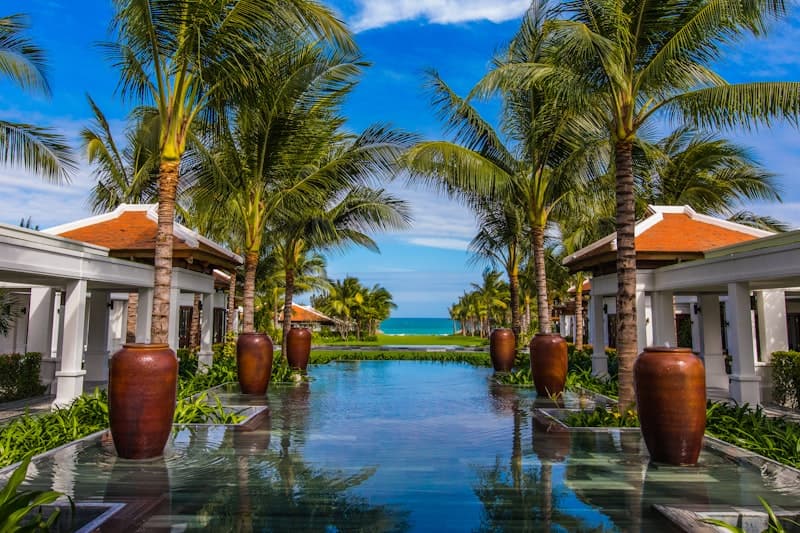
Phuket, Krabi, or Koh Samui once your surgeon clears you to fly domestically (usually day 5–7). Loose, breathable clothing works over the compression vest, and resort-style rest is easier on fresh scars than a long flight home. Keep sun off the incisions for six weeks.
Escape to the Mountains
Chiang Mai in the north is cooler than Bangkok in hot season and easier on the compression vest — less sweat, less humidity, less surface irritation. Slow pace, short walks, good food. Our pick for patients who want to disappear for a week.
“Most of the men we book don't tell anyone they're doing this. The Thailand leg is part concierge, part cover story — you leave with a tan, a holiday feed, and a chest you're proud of. We design the whole trip around that.”
Nat
Co-founder, ClinicPins
Options
Procedure types
Four technique families cover almost every gynecomastia case in Bangkok. Your surgeon matches the technique to your Simon grade — fatty vs glandular vs combined, with or without skin excision.
Liposuction-only (pseudogynecomastia / grade I)
Pseudogynecomastia is pure fatty tissue with no significant glandular disc — common in patients who have lost weight or have generalised chest adiposity. For Simon grade I and some grade IIa cases, liposuction in Thailand alone gives a clean chest contour without a periareolar scar. Most surgeons use the FDA-cleared VASER ultrasound system for selective fat emulsification around the pectoralis and axilla — less shear force on the overlying skin, better skin retraction in younger chests.
Technique
Suction-assisted or VASER ultrasound-assisted liposuction.
Incisions
2–3 mm punctures in the axilla and periareolar fold. No visible scar pattern.
Anaesthesia
MAC sedation with tumescent local, or light GA.
Session length
1–1.5 hours.
Recovery
5 days in Bangkok. Light work at 3 days, exercise at 4 weeks.
$1,800–$3,200
Save ~65% vs home“For pure pseudogynecomastia, don't let a surgeon talk you into an excision you don't need. A dense retroareolar disc you can pinch is gland. Loose tissue you can't pinch is fat. The distinction drives the plan.”
Nat
Co-founder, ClinicPins
Glandular excision (grade IIa — pure gland)
True gynecomastia means a firm retroareolar disc you can pinch between your fingers. Liposuction alone will not move it. A periareolar crescent incision around the lower half of the areola lifts the nipple-areola complex, the gland is excised under direct vision, and the NAC is re-seated on a preserved vascular pedicle. In a PRS Global Open 2020 systematic review, excision-only accounted for the minority of cases because the combined approach produces a lower hematoma profile.
Technique
Periareolar subcutaneous mastectomy (inferior crescent).
Incisions
Semicircular, along the lower half of the areolar border.
Anaesthesia
General anaesthesia.
Session length
1.5–2 hours.
Recovery
5–7 days in Bangkok. Back to desk work at 1 week.
$2,200–$3,800
Save ~60% vs home“Glandular excision is about how clean the final contour is under the nipple. A good surgeon leaves enough tissue to keep the NAC from sinking inward and enough cover to avoid a crater deformity.”
Nisha
Co-founder, ClinicPins
Combined lipo + glandular excision (grade IIa–IIb)Most common
The default pairing the literature supports. Liposuction (SAL or VASER) debulks chest fat and tightens the overlying skin envelope; glandular excision through a periareolar incision finishes the retroareolar disc. The PRS Global Open 2020 review places hematoma at 5.8% and seroma at 2.4% for combined technique — the lowest complication profile across the four techniques. The 2022 Aesthetic Plastic Surgery review across 7,294 patients reached the same conclusion. This is what most international patients are booking.
Technique
VASER or SAL + periareolar glandular excision.
Incisions
2–3 mm lipo punctures + semicircular periareolar.
Anaesthesia
General anaesthesia.
Session length
2–2.5 hours.
Recovery
5–7 days in Bangkok.
$2,500–$4,500
Save ~55% vs home“Combined technique is the default for a reason — fewer complications, cleaner contour, and the periareolar scar fades well. If a surgeon recommends excision alone for a grade IIa case, ask why.”
Nat
Co-founder, ClinicPins
Skin-excision mastectomy (grade IIb–III)
When there is significant skin redundancy — after major weight loss, long-standing grade III, or post-bariatric patients — the excess skin has to come off. Pattern depends on surgeon preference: donut mastopexy, double-incision with free nipple graft, or an extended pedicle. These cases often combine naturally with a tummy tuck in Thailand in the same concierge trip; a small number of patients also book alongside breast reduction in Thailand if a partner is also considering chest surgery.
Technique
Skin excision + glandular excision + liposuction.
Incisions
Concentric periareolar or transverse, depending on pattern.
Anaesthesia
General anaesthesia.
Session length
2.5–3 hours.
Recovery
7–10 days in Bangkok with overnight admission.
$4,500–$8,500
Save ~40% vs home“Grade III is where surgeon volume matters most. A surgeon who does four or five of these a year is not the same as one who does four or five a month. We route these cases accordingly.”
Nisha
Co-founder, ClinicPins
Partner Hospitals
Gynecomastia clinics in Bangkok
Three clinics across the tier range. One premium JCI hospital for grade IIb–III and revision cases, one JCI-accredited specialty institute, and one ThPRS-certified private clinic with documented male-chest-contouring volume at a lower price point.
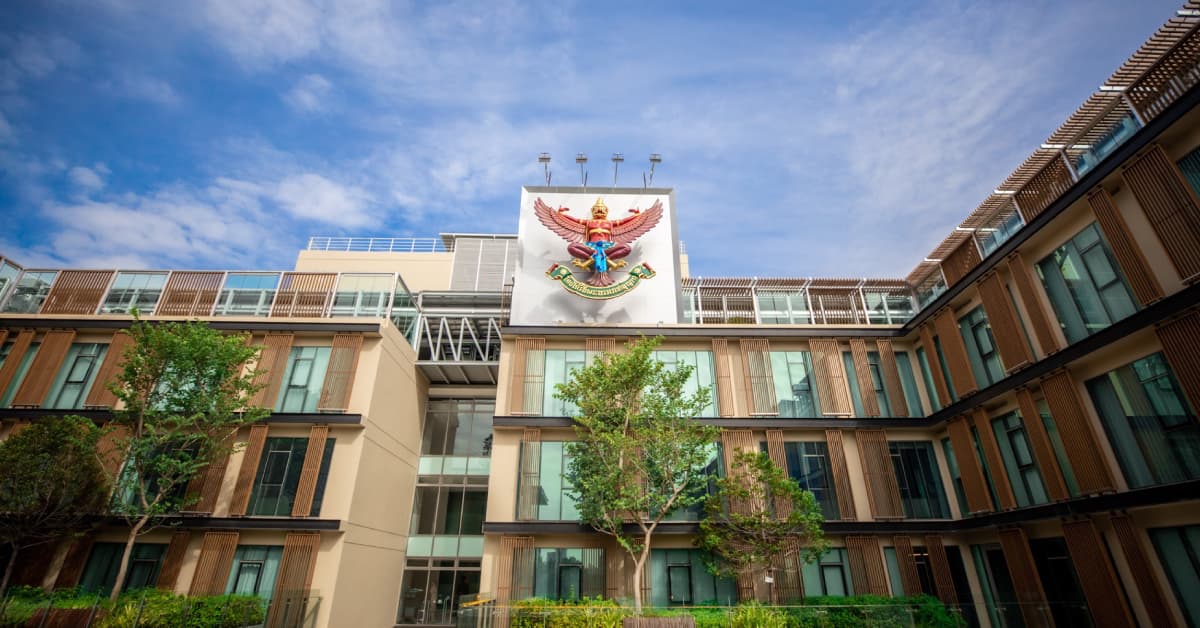
Bangkok International Hospital
JCISoi Soonvijai, Bangkok
JCI-accredited since 2007
Flagship of the Bangkok Hospital Group with multilingual staff and a full surgical program across cosmetic, dental, and general medicine.

TRSC International LASIK Center
EyeSilom, Bangkok
Dedicated laser vision-correction centre — 102,000+ eyes treated
A standalone eye and vision centre led by medical director Dr. Ekktet Chansue, offering ReLEx SMILE, FemtoLASIK, PRK, and ICL alongside cataract and retinal care.
Not sure which hospital?
Our team can match you with the right hospital based on your goals, body type, and budget.
Talk to UsYour Surgeon
How to choose your gynecomastia surgeon
Ask these questions before committing to any surgeon — most are happy to answer on video before you book:
Every physician practising in Thailand is on the Medical Council of Thailand register. For gynecomastia, the surgeon must also be board-certified through the Thai Board of Surgery with a plastic-surgery sub-specialty. Get the registration number in writing and verify it on the MCT CheckMD tool before your consultation, not after.
Volume is the single strongest proxy for skill on this operation. Ask for monthly gynecomastia case volume, then ask specifically about your grade. A surgeon doing 10+ gynecomastia cases a month with consistent grade IIa–IIb volume is a different proposition to a general plastic surgeon who does a few a quarter. For grade III, ask for annual volume in skin-excision mastectomy specifically.
The combined lipo + excision approach is the evidence-backed default for Simon grade IIa–IIb, with hematoma at 5.8% versus 22%+ in isolated-excision series. A surgeon recommending excision alone for a standard grade IIa case should have a specific reason. For pseudogynecomastia / grade I, liposuction-only is correct. For grade III with skin redundancy, expect a skin-excision pattern explained clearly.
Both FDA-cleared VASER and standard suction-assisted liposuction are valid; VASER tends to produce better skin retraction in younger, smaller grade I cases. Drain use varies by surgeon — the pooled data shows drains don't meaningfully change hematoma rates in most cases (9.78% with drains vs 8.36% without, confounded by case severity). What matters is that the surgeon has a consistent, evidence-based answer.
Day-10 photos flatter every surgeon because swelling hides contour issues. Ask for 6-month and 12-month photos specifically in your Simon grade. An honest surgeon sends them without hesitation and flags their own lessons learned — contour revisions, scar outcomes, asymmetry. For grade III skin-excision cases, 12-month photos are non-negotiable because scars take 12 months to settle.
Pooled data across literature places hematoma at 5.8% in combined-technique series and revision at 0–14%. A surgeon who tells you their own numbers — even if slightly higher than the pooled figure — is more credible than one who says they've never had a complication. The latter is statistically impossible at any real volume.
We send you home with a written post-op plan your GP or local plastic surgeon can follow, photos of what the wound should look like, a medication list, and red-flag symptoms. We stay on WhatsApp for 12 months. A confident surgeon has an escalation plan for wound healing, scar revision, and the rare case where a return trip to Bangkok is needed.
How we verify
We ask for Medical Council of Thailand registration numbers, Thai Board of Surgery / plastic-surgery sub-specialty certificates, ThPRS or ISAPS membership documentation, and unedited 6-month and 12-month gynecomastia photos across Simon grades I–III. If a clinic won't share these before you book, we don't recommend it.
Patient Stories
What patients say
All reviews are from verified patients who received treatment at the clinic they're reviewing. Photos omitted for privacy — gynecomastia is the procedure men most often ask us to keep off the page.
“Brisbane quote was AUD $13,500 self-pay. Bangkok specialty clinic did the same combined technique with a ThPRS-certified surgeon for AUD $5,400 all-in. Back at the gym at week five. Finally took my shirt off at the pool — first time in six years. Seven days in Bangkok and nobody at work noticed a thing.”
Marcus L.
Combined lipo + excision, grade IIa
“Years of cycling left me with dense glandular discs under each nipple — tamoxifen did nothing, as every study said it wouldn't. Bumrungrad did the combined excision for $6,200 all-in, overnight admission, the whole thing. I should have done this five years earlier. The psychological relief is not small.”
James K.
Grade IIb combined technique, post-AAS cycle
“After losing 110 lb I had chest and abdomen skin that wouldn't go anywhere. Private London quoted £16,000 for the combination. Bumrungrad did both in one trip for £8,100. Ten days in Bangkok, every appointment organised, the hotel staff never asked a question. Shape at six months is the body I wanted when I started the weight loss.”
David H.
Grade III skin-excision mastectomy + tummy tuck
All photos shared with explicit written consent. Results vary by individual.
See more treatmentsResearched & written by

Nat
Co-founder, ClinicPins
Born and raised in Bangkok. Educated in the US. Personally visited every clinic we recommend.

Nisha
Co-founder, ClinicPins
Fluent in Thai and English. Bridges the gap between international patients and Thai clinics.
We are concierge coordinators, not medical professionals. This content is for informational purposes only and does not constitute medical advice — always consult a board-certified surgeon for personalised recommendations. Meet the team
FAQ
Frequently asked questions
Combined lipo + glandular excision at a ThPRS-certified Bangkok specialty clinic runs $2,500–$4,500 all-in for Simon grade I–IIb. Premium JCI-hospital care at Bumrungrad, Samitivej, or BNH runs $4,500–$8,500 for grade IIb–III cases with skin excision. Budget clinics with ThPRS-credentialed surgeons sit at $1,800–$2,800 for grade I–IIa only. The ASPS 2024 national-average US surgeon fee is $5,587 — and that excludes anesthesia, facility, and tests. All-in US self-pay quotes run $4,800–$15,000; UK, Australia, and Canada sit in similar bands.
Plan 5–7 days for Simon grade I–IIa (liposuction-only or combined technique) and 7–10 days for grade IIb–III (skin-excision mastectomy). That covers surgery, the first-week swelling peak, drain removal at days 2–4, and a pre-flight clearance review with your surgeon before you fly home. Flying before day 5 is not advised — peak swelling at days 2–4 plus DVT risk on long-haul flights both argue for staying.
Yes — and it is a growing surgical indication. Once glandular tissue fibroses (the typical outcome after prolonged AAS exposure), pharmacotherapy like tamoxifen and other SERMs rarely works, per a 2023 PRS Global Open review. Surgery becomes the only definitive treatment. Be honest with your surgeon about current and past cycles — it changes the technique plan, not the willingness to operate. If you plan to continue cycling after surgery, recurrence is more likely; pausing or ending AAS use gives the best long-term result.
Pseudogynecomastia is pure fatty tissue without a glandular component — common in patients with generalised chest adiposity or after weight loss. You can compress the tissue and it moves like fat. Liposuction-only is the correct operation. True gynecomastia has a firm retroareolar glandular disc you can pinch between your fingers — often tender, often central, and immovable on liposuction alone. Simon's 1973 grading (I / IIa / IIb / III) formalises the spectrum. Most patients are somewhere in the middle and need a combined lipo + excision approach.
Recurrence is rare in non-hormonal, non-pharmacological cases — the glandular tissue that was excised doesn't grow back. Where recurrence does occur, it's almost always driven by an underlying cause that wasn't addressed: continued anabolic-steroid use, untreated hyperprolactinemia, hypogonadism, or certain medications (spironolactone, some antipsychotics, cimetidine). If any of those apply, work with your endocrinologist or GP before surgery. A good plastic surgeon will ask about them at consultation.
Yes, and it is a common concierge trip. Gynecomastia pairs naturally with a tummy tuck in Thailand for post-weight-loss patients, and with body or flank liposuction in Thailand for broader contouring. Combining adds operating time and extends the Bangkok stay — a gyne + abdominoplasty combination typically needs 10–12 days in-country versus 5–7 for gyne alone. Your surgeon decides on safety grounds whether to stage or combine.
No. "Male breast reduction" is the everyday phrase for gynecomastia surgery — this page. "Breast reduction" in the surgical literature refers to reduction mammoplasty in women (macromastia), which is a different operation with different scars, pedicles, and recovery. If you are looking for the female procedure, see our breast reduction in Thailand page at /treatments/breast-reduction/.
Still have questions? Talk to our concierge team
Ready to start planning?
Tell us what you're considering — even if you're just exploring. No commitment, no pressure.
ClinicPins receives referral fees from partner hospitals. This does not affect our recommendations or your price. Read our editorial policy.
Related
Related treatments
Liposuction
The sibling procedure — chest lipo covers pseudogynecomastia and grade I cases, and body liposuction often stacks with gyne for post-weight-loss patients.
Learn more
Tummy Tuck
Pairs naturally with gynecomastia for post-weight-loss patients. A combined trip adds 3–5 days to the Bangkok stay.
Learn more
Breast Reduction
The female counterpart — reduction mammoplasty. A different operation with different scars, pedicles, and recovery.
Learn more